Vase

Skip to main content
This record is part of an active database and may include information from historic documentation that could be inaccurate or incomplete. We frequently update our records based on ongoing research and review. If you have questions, concerns, or additional information about this object, contact us via this form.

Vase

Datelate 17th Century
GeographyDelft, South Holland, Netherlands, Europe
MediumTin-glazed earthenware
Dimensionsoverall: 21 3/4 in. x 15 in. x 15 in. (55.2 cm x 38.1 cm x 38.1 cm)
Credit LineMuseum purchase with funds provided by Wellesley College Friends of Art
Object number2015.67
Status
On view
RightsCopyright is retained in accordance with U.S. Copyright laws
Photo creditDavis Museum at Wellesley College, Wellesley, MA
More Information

During the seventeenth and eighteenth centuries, blue-and-white ware became a key medium for transmitting artistic symbols, motifs, and designs across the world, creating a shared global aesthetic in ceramic production. Exchange between China and the Middle East sparked a market for blue-and-white ware. As early as the tenth century, potters in Jingdezhen, China, began producing qingbai (bluish-white porcelain) for trade with the Middle East. Potters in Iran experimented with painting cobalt designs on porcelain, in addition to creating their own blue-and-white lusterware. This in turn prompted Chinese artisans to begin decorating their works. 


During the thirteenth century, lusterware and blue-and-white ware were introduced to Italy via Islamic Spain and Turkey. Soon after, colorful tin-glazed earthenware (maiolica) was produced throughout Italy and traded across Europe, priming the market for blue-and-white by the seventeenth century. In 1603, the Dutch East India Trading Company became the dominant European power in the Far East, instrumental in transporting Chinese blue-and-white to Europe. As the ceramic market in Europe expanded, artisans across Europe––Spain, Italy, and the Netherlands––emulated Chinese blue-and-white. Unable to replicate porcelain, the Dutch created their own tin-glazed earthenware, known as Delftware, which offered a secondary market for European consumers and undermined China’s monopoly in the ceramics trade. 


Production of blue-and-white from China to Colonial Mexico is the result of an intense era of cross-cultural connection, when artisans across the globe drew inspiration from one another, imitating color, form, and motif to cater to emerging regional and global markets for porcelain.
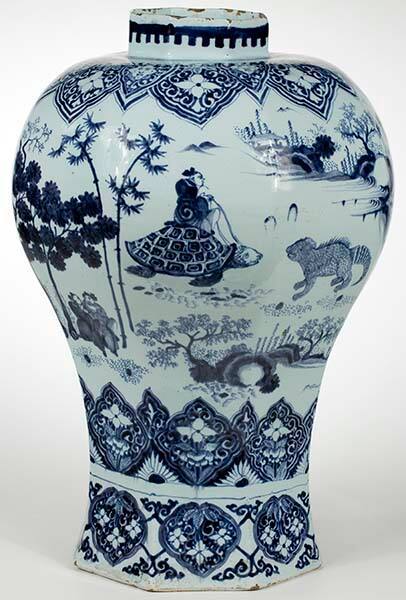
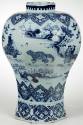
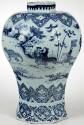
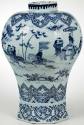
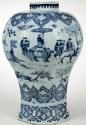
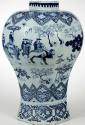
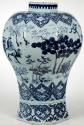
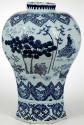
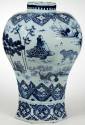
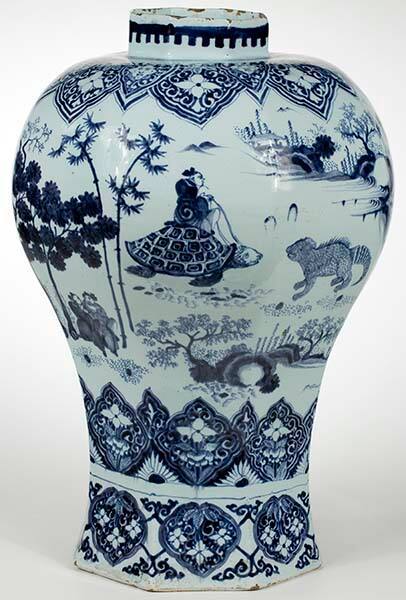
During the seventeenth and eighteenth centuries, the Dutch East India Trading Company (VOC) monopolized trade with China, exporting blue-and-white porcelain to Europe. Porcelain was not produced in Europe until the eighteenth century. Potters in Delft worked with tin-glazed earthenware to imitate its white surface and sheen. Delftware developed into a secondary market for blue-and-white goods, providing a less costly, local alternative. While some examples of Delftware incorporate native scenes of cows, windmills, and ships, the potters mainly catered to a clientele charmed by exotic motifs embodying Dutch fantasies of the East. On this vase, men dressed in Chinese fashion ride a camel, turtle, and rhinoceros, and a komodo dragon stands in the garden. While most of these animals are not indigenous to Europe, the Dutch would have known about them from travelogues and prints. The creatures’ peculiar features and proportions highlight the painter’s lack of direct observation.
French
ca. 1685
Object number: 2023.3.2a-b
Atelier Saint-Jean-du-Désert or possibly made in Moulins
ca. 1680-1700
Object number: 2023.3.15
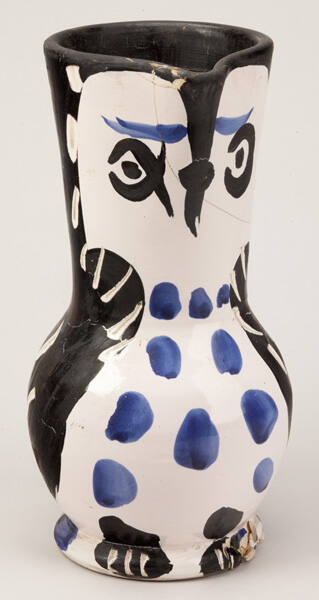
Small Owl Jug (A. Ramié 293)
Pablo Picasso
1955
Object number: 2014.37
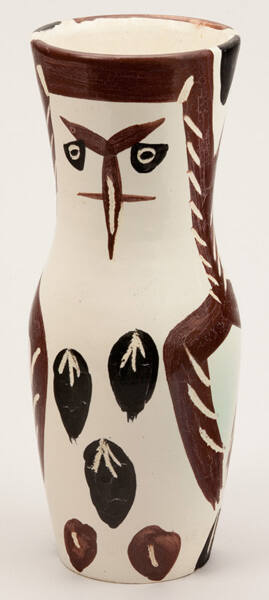
Chouette (Young Wood Owl) (A. Ramié 135)
Pablo Picasso
1952
Object number: 2014.39
Young Wood Owl
Pablo Picasso
1952
Object number: 1993.45
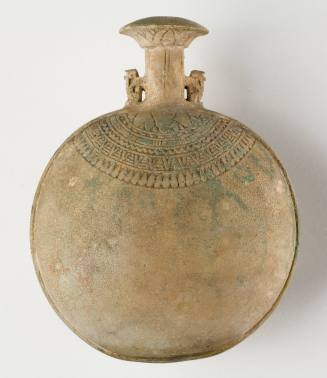
Flask bottle
Egyptian
26th dynasty, ca. 664-525 B.C.E.
Object number: 1958.14
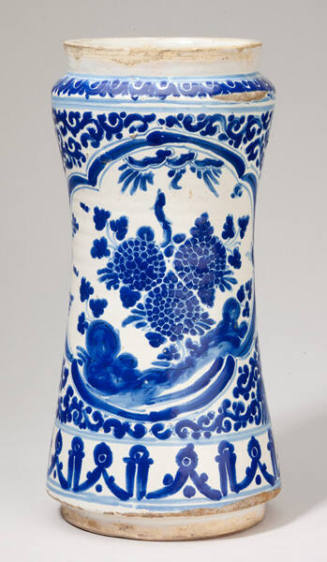
Apothecary Jar
Mexican
1700-50
Object number: 2014.161
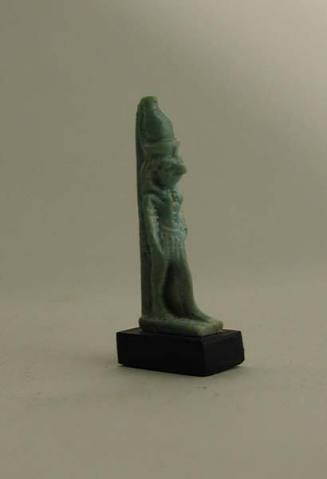
Horus Pendant
Egyptian
28th-30th Dynasty, 404-343 B.C.E.
Object number: 1994.61
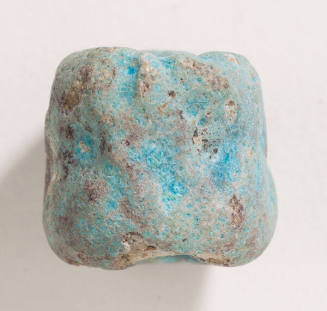
Bead
Roman
Object number: 1971.17.35.5
French
ca. 1660-80
Object number: 2023.3.1