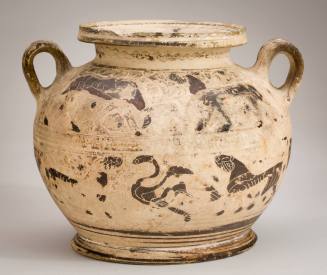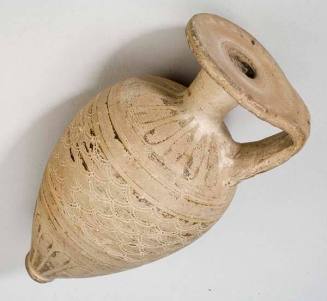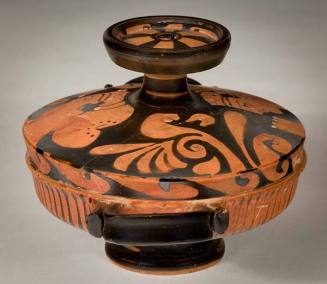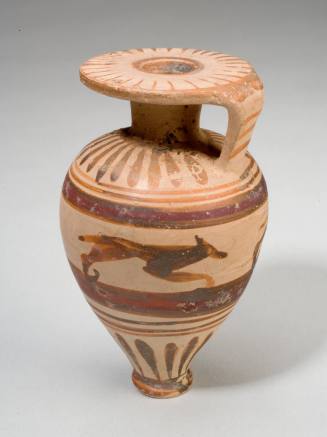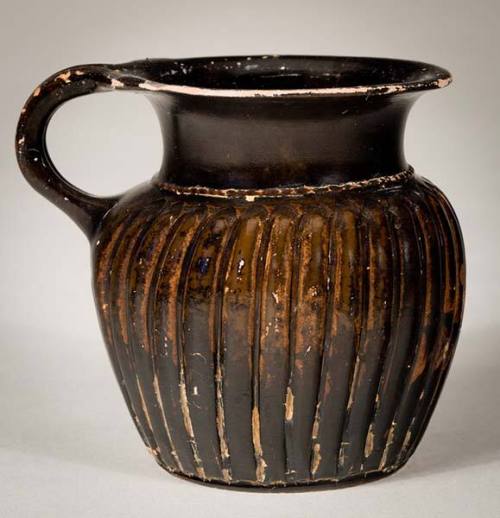
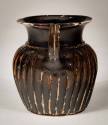
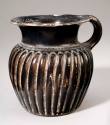
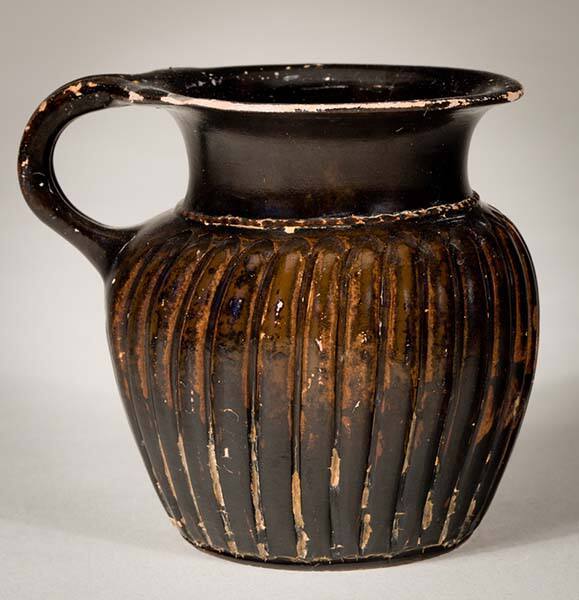
Mug

Skip to main content
This record is part of an active database and may include information from historic documentation that could be inaccurate or incomplete. We frequently update our records based on ongoing research and review. If you have questions, concerns, or additional information about this object, contact us via this form.

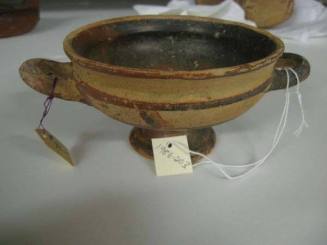
Mug

Maker
DateClassical period, 450-430 B.C.E.
GeographyAttica, Greece, Europe
MediumTerracotta with glaze
Dimensionsoverall: 2 3/4 in. x 3 1/4 in. x 2 3/4 in. (7 cm x 8.3 cm x 7 cm)
Credit LineMuseum purchase
Object number1975.83
Status
On view
ProvenanceProf. John Oddy.
RightsCopyright is retained in accordance with U.S. Copyright laws
Photo creditDavis Museum at Wellesley College, Wellesley, MA
More Information

Pottery in the Ancient World

Ceramic vessels mediated diverse interactions in the ancient world, from trade and commerce to domestic and civic life, from drinking parties to athletic competitions, and from birth to the grave. Pottery production was a dynamic enterprise in which potters and painters were inspired by other media, such as metalwork and carved ivory, and by images produced by other cultures. Extensive trade connections between the Near East, Greece, Southern Italy, and Etruria ensured the movement of goods and people throughout the Mediterranean world, resulting in some shared trends in material culture and local tradition. Athens in particular came to dominate pottery production, and Athenian vases were produced in great numbers both for local use and for export. Many fine Athenian vases survive today because they were buried in Etruscan tombs in Italy.


Ancient pottery has long been of interest to scholars, and has been collected since the Renaissance. In the eighteenth and nineteenth centuries, when art history was emerging as an academic discipline, vessels and vases offered concrete connections to ancient societies. Today, pottery contributes some of the most important evidence for life in antiquity.
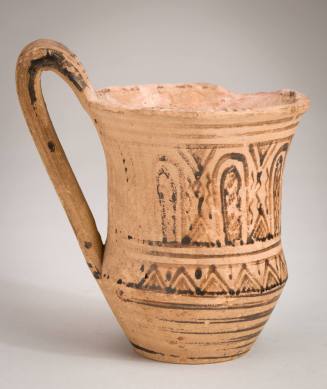
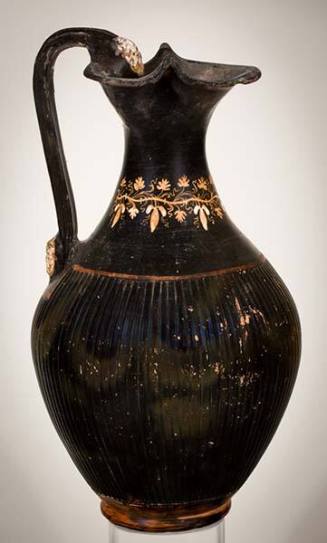
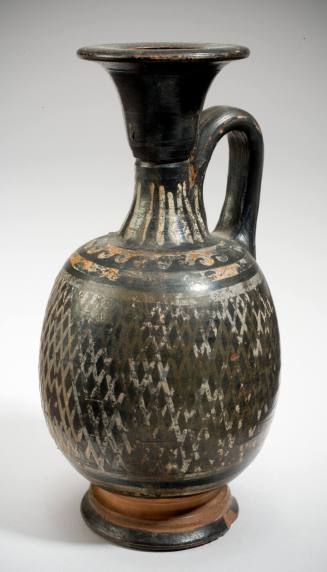
Mug
Greek
Late Geometric period, 760-740 B.C.E.
Object number: 1929.1
Gnathian ware pitcher
Greek
3rd century B.C.E.
Object number: 1976.38
Lekythos
Greek
Hellenistic period, 4th century B.C.E.
Object number: 1931.42
Pyxis
Greek
Corinthian period, 600-575 B.C.E.
Object number: 1950.22c
Aryballos
Greek
Proto-Corinthian, ca. 700 B.C.E.
Object number: 1975.79
Red-figure lekanis
Greek
Late Classical period, ca. mid-4th century B.C.E.
Object number: 2009.4a-b
Red-figure bell krater: Dancer / Youths
Greek
Classical period, ca. 400 B.C.E.
Object number: 2009.2
Pointed Aryballos
Greek
Late Proto-Corinthian, 650-625 B.C.E.
Object number: 1919.3.2
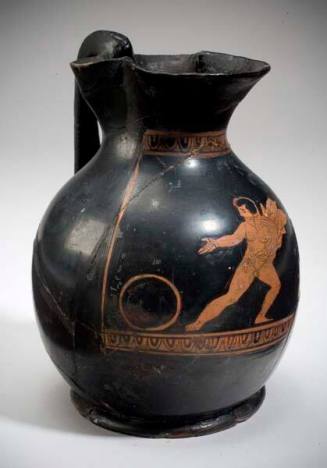
Olpe: Boy and hoop
Greek
Classical period, ca. 430 B.C.E.
Object number: 1969.17.5
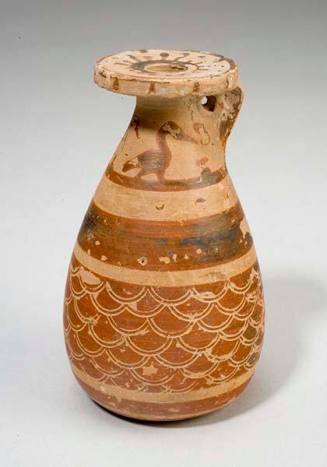
Alabastron
Greek
Corinthian period, late 7th century B.C.E.
Object number: 1980.86
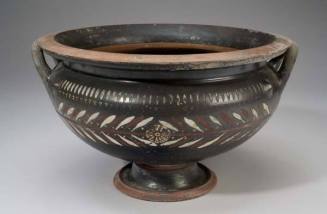
Gnathian ware bowl
Greek
3rd century B.C.E.
Object number: 1976.39
Two-handled cup
Roman
5th-4th century B.C.E.
Object number: 1986.203