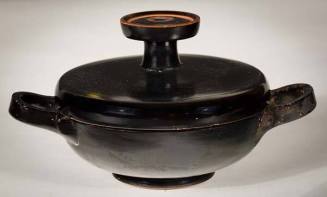
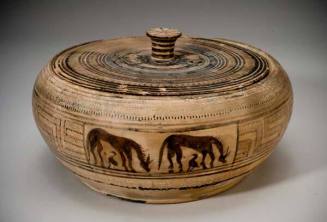
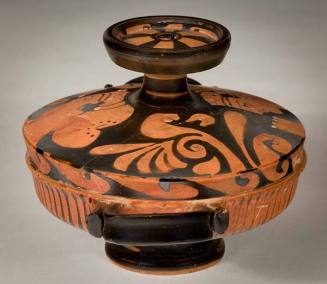
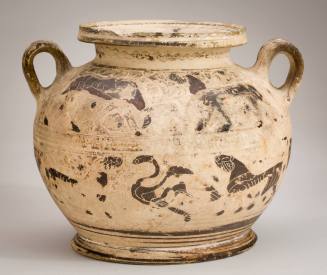
Exaleiptron
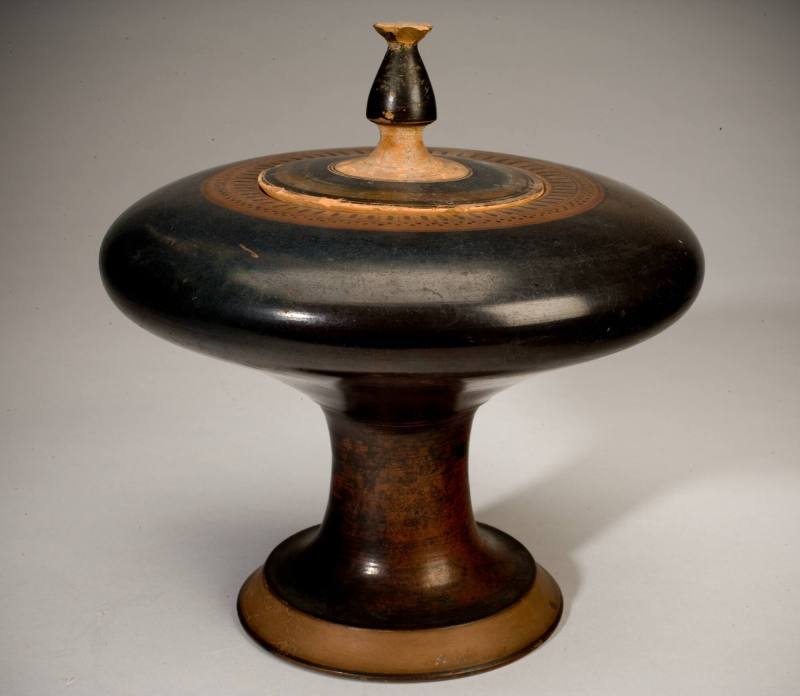
Exaleiptron
Making and Decorating Pottery
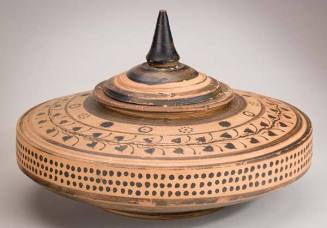
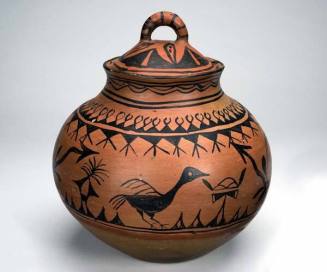
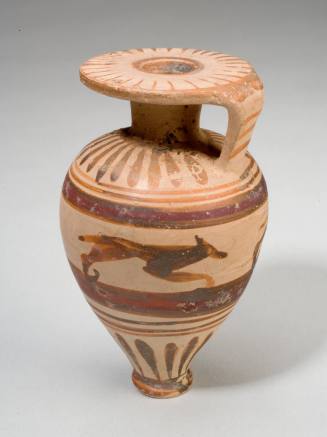
Clay was an abundant natural resource in the ancient Mediterranean and highly suitable for making vessels. It was malleable when moist, and when fired at high temperatures, it became hard and extremely durable. The color and texture of clay depends on its mineral composition: while clay from Attica is rich in iron, giving it an orange-red color, clay from Corinth has high calcium content, and thus appears lighter yellow.
In order to shape a vessel, potters would use a rotating wheel in a process called throwing. Depending on the shape of the vessel, a potter might throw it in one piece or in multiple pieces, and later join them with clay. Once the vessel was dried and burnished smooth, decoration could be applied with a slip, a diluted mixture of clay and potash that would turn black when the vessel was fired under the right conditions. Mineral-based paints––whites, reds, and yellows––could be used to add colored details before or after firing. Two slip-based decorative processes dominated pottery production in ancient Athens.
The first technique—known as black-figure––was developed in Corinth around 700 B.C.E. and later adopted by potters in Athens. In this technique, the figures painted in slip would turn black against the natural color of the vessel wall when fired. Details such as facial features and garments were rendered in lines incised through the slip.
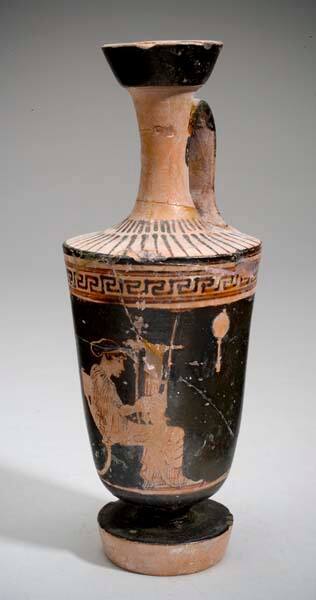
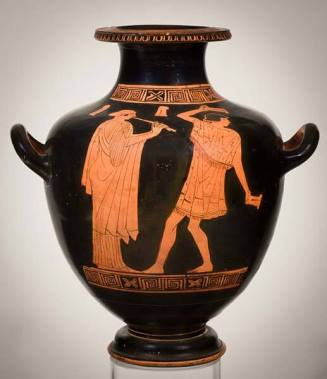
Invented in Athens around 530 B.C.E., the red-figure technique was revolutionary because it reversed the color scheme. The areas around the figures were painted with slip, which darkened to black on firing. Defined by the unpainted negative space, the figures remained the natural red of the clay. This reversal allowed for much more expressive figures and scenes.
The use of the white-ground technique was less common, but was popular on vessels like lekythoi that served funerary functions. In this technique, a fine, whitened slip was painted over the surface of the vessel, masking the color of the clay underneath. Figures would then be painted onto the whitened slip in black or other colors.