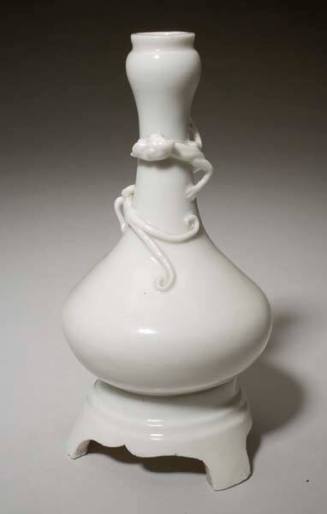
Dehua ware vase
Skip to main content




This record is part of an active database and may include information from historic documentation that could be inaccurate or incomplete. We frequently update our records based on ongoing research and review. If you have questions, concerns, or additional information about this object, contact us via this form.
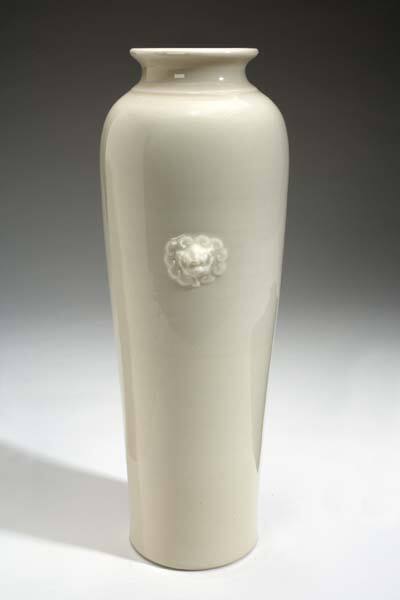
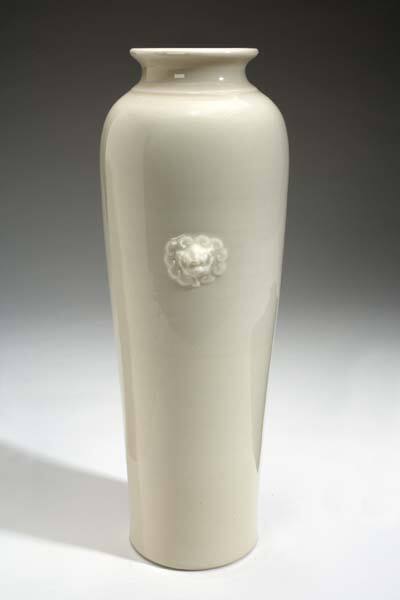
Dehua ware vase
Maker
Chinese
DateQing dynasty, 19th–20th century
GeographyChina, Asia
MediumPorcelain
Dimensionsheight: 13 1/2 in. (34.3 cm)
Credit LineGift of Mrs. Arthur J. Cohen (Nellie Zuckerman, Class of 1912)
Object number1975.102.16
Status
Not on viewRightsCopyright is retained in accordance with U.S. Copyright laws
Photo creditDavis Museum at Wellesley College, Wellesley, MA
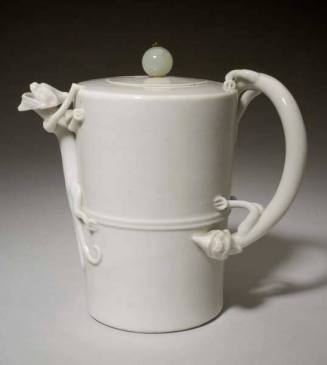
More InformationBlanc de Chine, or “White from China,” is the Western name for white porcelain wares from the kilns in Dehua. First produced in the Ming dynasty, the pure white porcelain is covered with a milky white glaze to create a simple white object with a focus on delicacy of form and decoration, as seen in the wine ewer with dragon spout and handle here.
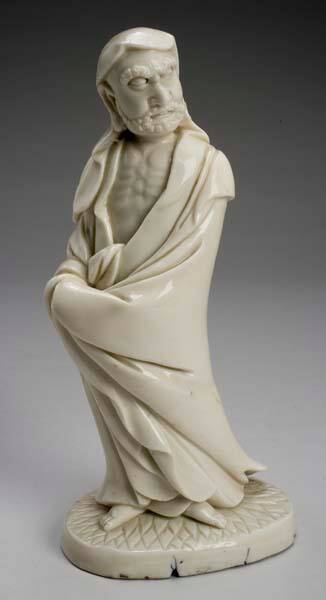
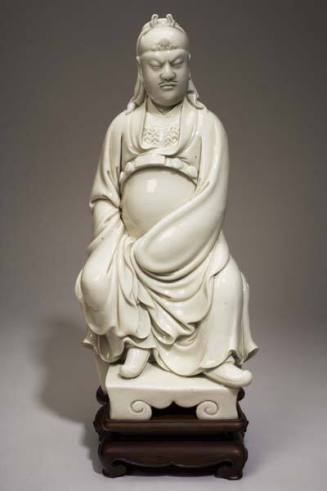
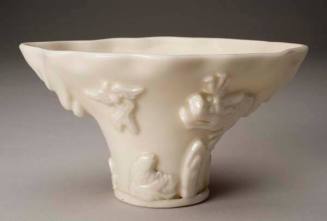
Dehua ware refers to the milky white porcelain produced in Dehua, China. In a process first developed during the Ming dynasty, the white porcelain material is covered with a translucent glaze before firing. Absent color and surface decoration, Dehua objects emphasize inventive form, as seen in the wine ewer with dragon spout and handle here. Dehua ware is sometimes referred to as blanc de Chine (“white from China”), a phrase assigned by Europeans who began importing white porcelain from Dehua in the seventeenth century.
Atelier Saint-Jean-du-Désert or possibly made in Moulins
ca. 1680-1700
Object number: 2023.3.15
Chinese
Ming or Qing dynasty, 17th-19th century
Object number: 1971.6
Chinese
Qing dynasty, 19th–20th century
Object number: 1975.102.3.1