Through The Fence
Through The Fence
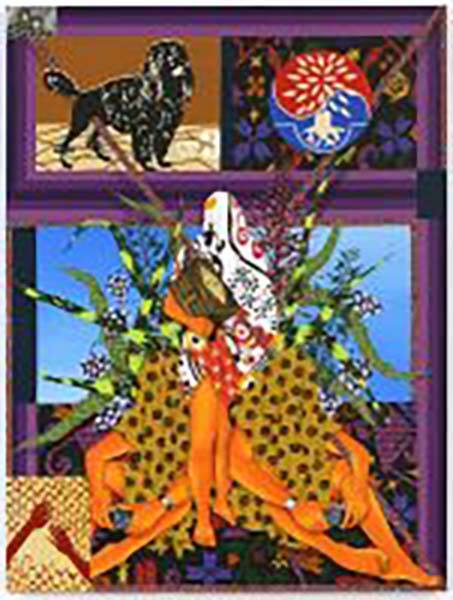
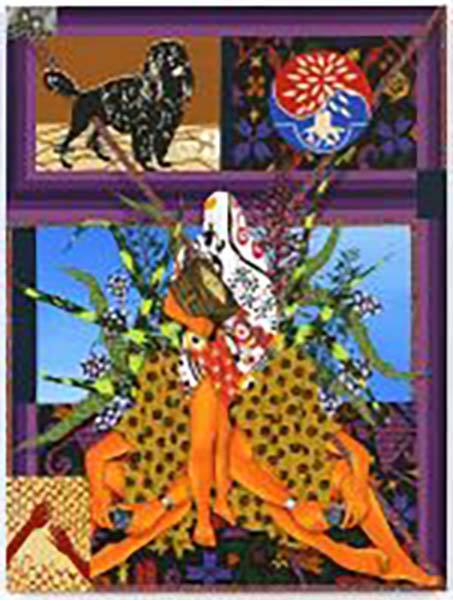
The first work by Iranian-American artist Amir H. Fallah to enter the Davis collections, Through the Fence explores diverse perspectives on immigration to the United States. Born in Tehran and raised in the United States, Fallah draws on the legacies of both Persian and American art in order to interrogate systems of Western representation, while exploring the political, social, and cultural experiences of immigration. The artist, who works across media but primarily describes himself as a painter, received his BFA in Fine Art and Painting from the Maryland Institute College of Art and his MFA from the University of California, Los Angeles. Currently residing in Los Angeles, he recently received an Artadia award, and his work is held in the permanent collections of many institutions, including the Smart Museum of Art at the University of Chicago, The Microsoft Art Collection, and the Salsali Private Museum.
While Through the Fence is emblematic of the artist’s surrealist style, it is also a figurative painting that addresses specific histories of people who have come to the United States from other countries in the twentieth and twenty-first centuries. Foregrounded in this work are three human figures who—like most of Fallah’s figures—are obscured by shawls that conceal their identities. A painted image of a grayscale photograph tucked away in the upper left corner of the painting depicts two similarly faceless individuals. Throughout his work, Fallah investigates the mutability of selfhood and belonging; this visual theme of facelessness may represent the loss and recreation of identity as individuals move through different environments, and even through time itself. However, his inclusion of a chain-link fence—grasped and torn apart by a pair of hands—reminds us that for many people, these travels through time and space are both painful and profoundly dangerous. Through the Fence is strewn with images and textures that allude to materials as varied as vintage American advertisements, Persian textiles, protest art, and ancient Chinese iconography. By juxtaposing these sometimes discordant symbols, the artist invites us to view the United States through a variety of different lenses—including from the other side of a fence—thus challenging monolithic assumptions about both American identity and American art.