Untitled
Skip to main content
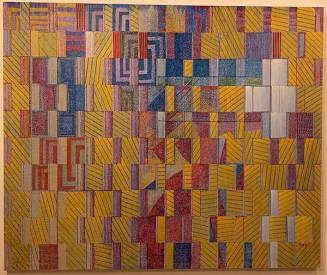
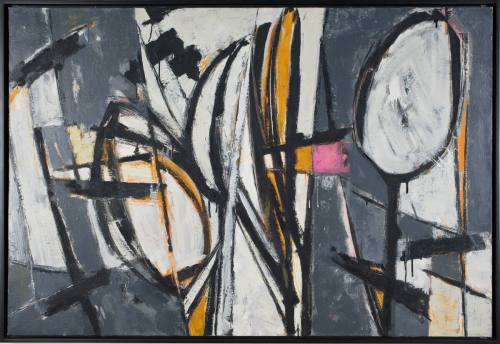
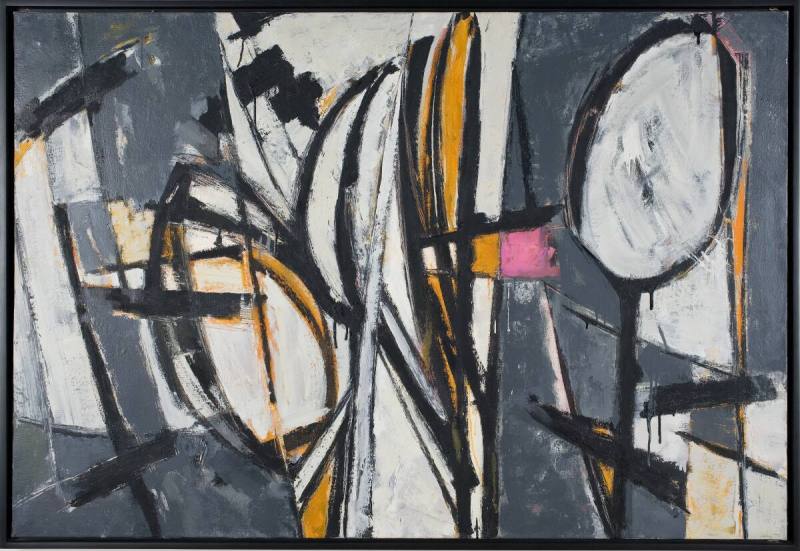
This dynamic abstraction, with its delicious palette, proceeds as though to flatten a Cubist scene, alluding to figures and forms in space and rendering them most simply into graphic outlines and punchy shapes. In Lee Krasner: A Catalogue Raisonné, published in 1995, the author says of the painting that “according to Krasner, this is a second example of the ‘transitional’ type of work Betty Parsons saw in her studio when Jackson Pollock asked his dealer to consider giving Krasner an exhibition

This record is part of an active database and may include information from historic documentation that could be inaccurate or incomplete. We frequently update our records based on ongoing research and review. If you have questions, concerns, or additional information about this object, contact us via this form.
Untitled
Maker
Lee Krasner
(b. 1908, Brooklyn, New York – d. 1984, New York, New York)
Date1951
MediumOil on canvas
Dimensions39 3/4 in. x 58 1/16 in. (101 cm x 147.5 cm)
Credit LineBequest of Merrill Millar Lake (Class of 1936)
Object number1980.69
Status
Not on viewRightsCopyright is retained in accordance with U.S. Copyright laws
Photo creditDavis Museum at Wellesley College, Wellesley, MA
More InformationLena Krasner, the first of five siblings to be born in America, was educated at the Women’s Art School of the Cooper Union and the National Academy of Design in New York. She worked in the mural division of the Federal Art Project/Works Project Administration of the New Deal and in 1937 began classes with Hans Hofmann. Married to Jackson Pollock in 1945, her long career was largely overshadowed by the success, notoriety, and dramatic death of her husband.
This dynamic abstraction, with its delicious palette, proceeds as though to flatten a Cubist scene, alluding to figures and forms in space and rendering them most simply into graphic outlines and punchy shapes. In Lee Krasner: A Catalogue Raisonné, published in 1995, the author says of the painting that “according to Krasner, this is a second example of the ‘transitional’ type of work Betty Parsons saw in her studio when Jackson Pollock asked his dealer to consider giving Krasner an exhibition