Annunciation


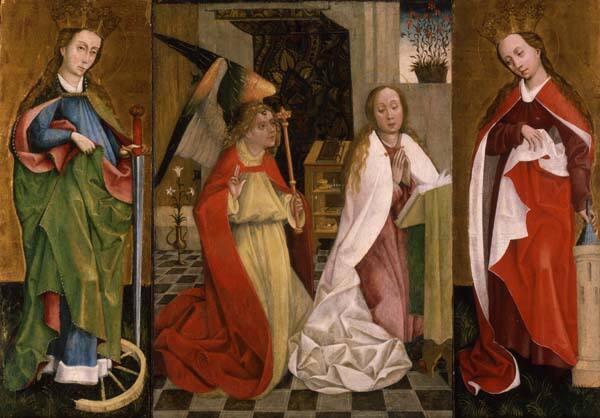
Annunciation
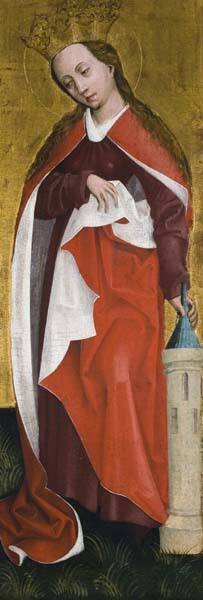
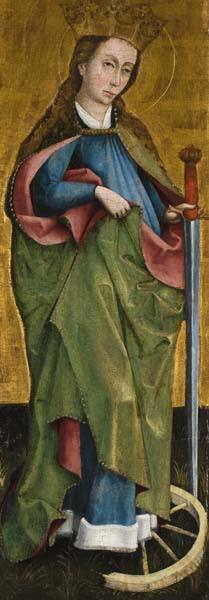
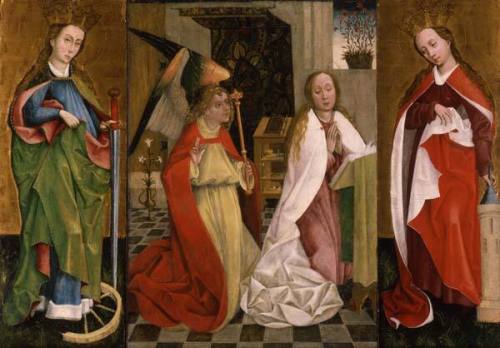
Purported to be the central panel to the side panels on view, which the Wellesley College Museum acquired in 1953, the Annunciation was purchased by the museum five years later to “reunite” the altarpiece fragments and create an intact fifteenth-century triptych—a rarity in North American collections. While the panels possess some similarities in style that suggest their production in the Middle Rhineland, Germany, the difference in palette and background and the uneven execution of the figures and drapery indicate they more likely originated in different workshops. The scene of the Annunciation—the moment when the Angel Gabriel informs Mary of her miraculous conception—was very popular among medieval and Renaissance painters. Here, the small objects displayed in the Virgin’s “home,” such as the lily, the candlesticks and box of spools in the lectern, and the dianthus plant displayed on the windowsill, have symbolic import. They were intended to provoke theological contemplation on the meaning of the Annunciation, the Virgin birth, and their centrality to the Christian story.