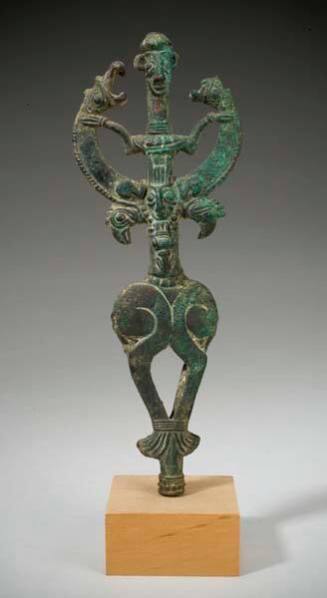
Finial
Skip to main content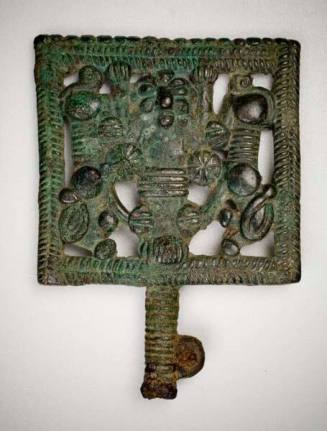



This record is part of an active database and may include information from historic documentation that could be inaccurate or incomplete. We frequently update our records based on ongoing research and review. If you have questions, concerns, or additional information about this object, contact us via this form.
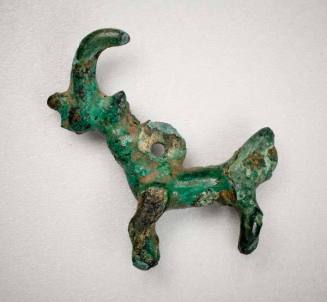
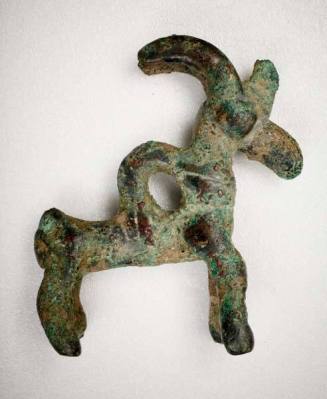
Finial
Maker
Luristan
Date1000-700 B.C.E.
GeographyLuristan, Iran, Asia
MediumBronze
Dimensionsoverall: 5 1/8 in. (13 cm)
Credit LineGift of Mr. and Mrs. Charles Post (Cynthia Dudley, Class of 1934)
Object number1994.63
Status
Not on viewProvenanceDonor purchased 12/14/1978 at Sotheby, NY.
RightsCopyright is retained in accordance with U.S. Copyright laws
Photo creditDavis Museum at Wellesley College, Wellesley, MA
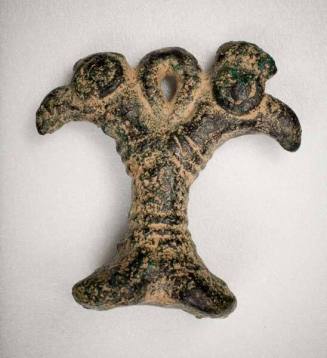
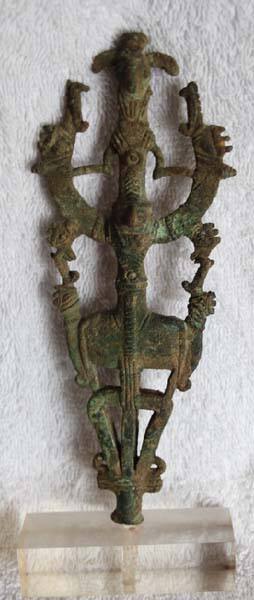
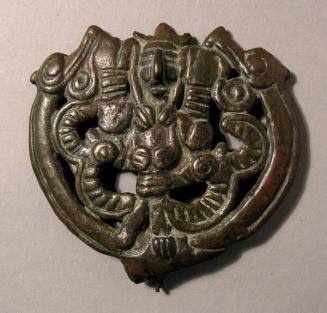
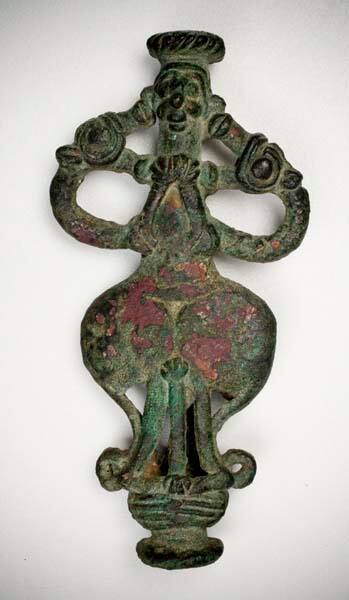
More InformationThe province of Luristan in central western Iran has a rich tradition of bronze objects made in the early part of the first millennium B.C.E. Cast using the lost wax process, these objects include weapons, decorations, horse ornaments, and finials. They entered the antiquities market in the late 1920s, often without their precise origin being known. Very few bronzes were excavated and documented through official channels; the great majority were plundered from tombs and shrines by local people and sold to Western art dealers. / Luristan cheek and harness pieces for horses are among the objects in the Davis Museum collection: the ancient people of Luristan were probably partially nomadic, and they had an organized cavalry. The cheek pieces on view show an openwork ibex head with large horns and rampant felines on each side. The harness ring may have both adorned and protected the horse. The finials represent pairs of confronted animals, such as ibexes or felines, with elongated necks and gaping jaws. Their legs often meet, to create a ring shape through which a shaft or tube likely passed. Other finials take the form of an ancient Near Eastern motif: a tubular human figure called the Master of Animals holds a wild bird-headed animal by the throat in each hand. Stylistically, the most naturalistic appear to be the earliest, with the patterns becoming more elaborate over time. The meaning and function of these finials remain unknown. Their iconography may refer to strength and fertility. Some scholars suggest that they could be deity symbols or processional objects.
Luristan
ca. 1000 B.C.E.
Object number: 1959.33a-b