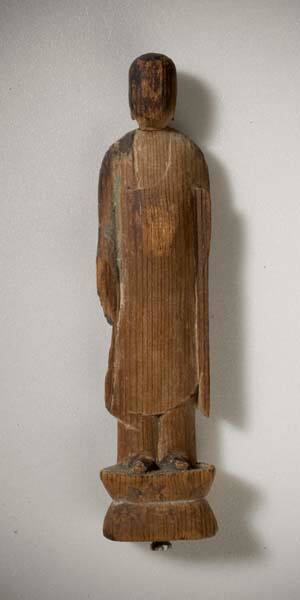
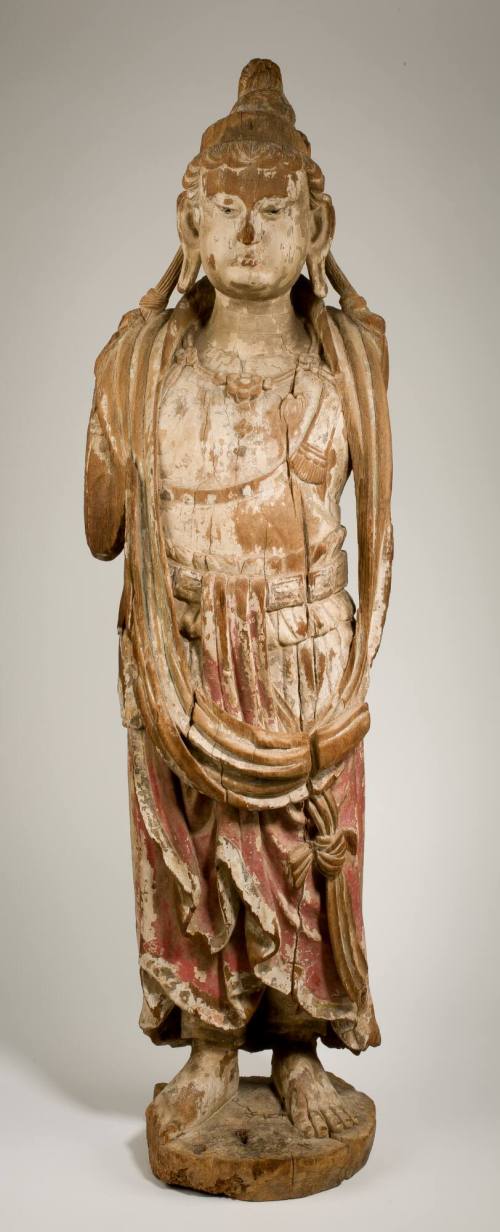
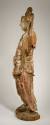
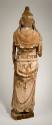
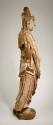
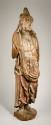
Standing Bodhisattva
Skip to main content
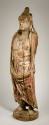
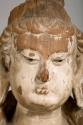
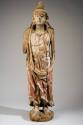
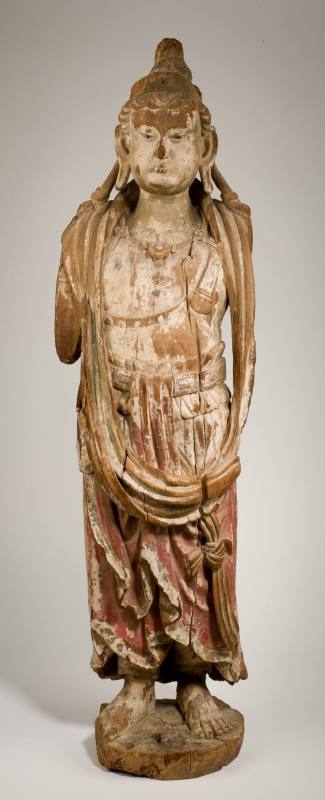
This case displays examples of figures in Buddhism who assist believers on the path to enlightenment. A pair of ceramic dvarapalas, or gate guardians, dressed as menacing warriors, were originally placed on either side of the doors or gates to a temple to ward off evil. The standing Bodhisattva represents a follower of Buddha who has become enlightened but intentionally delays nirvana in order to assist others in the quest. The Buddha, bodhisattvas, and other disciples are featured in the miniature stele on view, created as a votive gift in thanks for an answered prayer.



This record is part of an active database and may include information from historic documentation that could be inaccurate or incomplete. We frequently update our records based on ongoing research and review. If you have questions, concerns, or additional information about this object, contact us via this form.
Standing Bodhisattva
Maker
Chinese
DateLiao Dynasty, 10th-11th century
GeographyChina, Asia
MediumWood, traces of polychrome and gilt, inlaid glazed ceramic eyes
Dimensionsoverall: 37 1/2 in. (95.3 cm)
Credit LineGift of Mrs. David M. Levitt (Norma Uttal, Class of 1937)
Object number1959.5
Status
On viewRightsCopyright is retained in accordance with U.S. Copyright laws
Photo creditDavis Museum at Wellesley College, Wellesley, MA
More InformationBuddhism was first introduced to China by missionaries from India during the first century C.E. (Han dynasty). As the first non-native religion to garner widespread support in China, Buddhism offered a new perspective on life and the afterlife than Confucianism and Daoism. Unlike its two predecessors, with their focus on the worship of ancestor spirits, it offered enlightenment to its followers. Mahayana Buddhists believed that anyone could reach nirvana through study of the life and teachings of the Buddha and with help from the bodhisattvas.
This case displays examples of figures in Buddhism who assist believers on the path to enlightenment. A pair of ceramic dvarapalas, or gate guardians, dressed as menacing warriors, were originally placed on either side of the doors or gates to a temple to ward off evil. The standing Bodhisattva represents a follower of Buddha who has become enlightened but intentionally delays nirvana in order to assist others in the quest. The Buddha, bodhisattvas, and other disciples are featured in the miniature stele on view, created as a votive gift in thanks for an answered prayer.
Afghan (probably Hadda)
Kushan period (ca. 100 B.C.E.-250 C.E.)-Kushano - Sasanian period (250-ca. 500 C.E.), 3rd-5th century C.E.
Object number: 1931.13
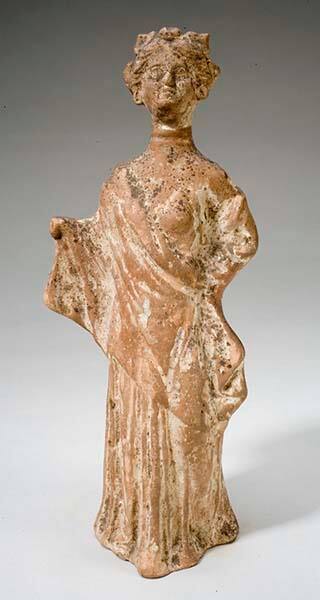
Greek
Hellenistic period, ca. 3rd century B.C.E.
Object number: 1986.28
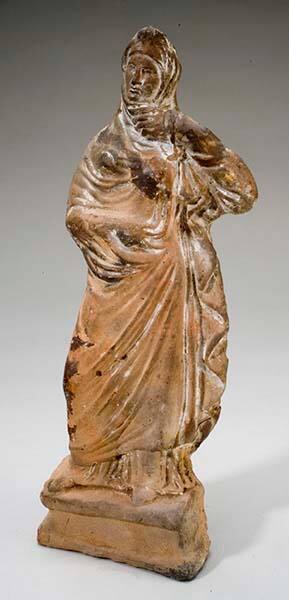
Greek
Hellenistic period, late 4th century B.C.E.
Object number: 1986.29
Afghan (probably Hadda)
Kushan period (ca. 100 B.C.E.-250 C.E.)-Kushano - Sasanian period (250-ca. 500 C.E.), 3rd-5th century C.E.
Object number: 1931.14
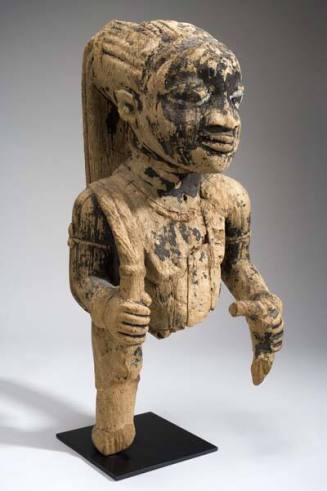
Agbonbiofe Adeshina (or workshop of)
1st quarter of the 20th century
Object number: 2004.45
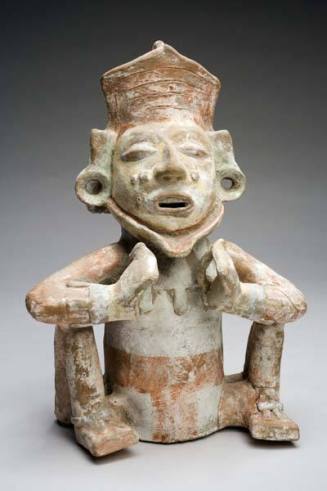
Classic Veracruz
1200-1500
Object number: 1986.169
Afghan (probably Hadda)
Kushan period (ca. 100 B.C.E.-250 C.E.) - Kushano-Sasanian period (250-ca. 500 C.E.), 3rd-5th century C.E.
Object number: 1931.12