Gelede mask
Skip to main content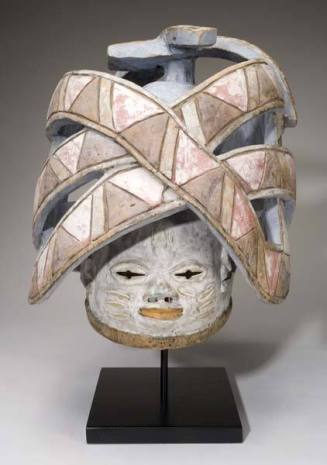



This record is part of an active database and may include information from historic documentation that could be inaccurate or incomplete. We frequently update our records based on ongoing research and review. If you have questions, concerns, or additional information about this object, contact us via this form.
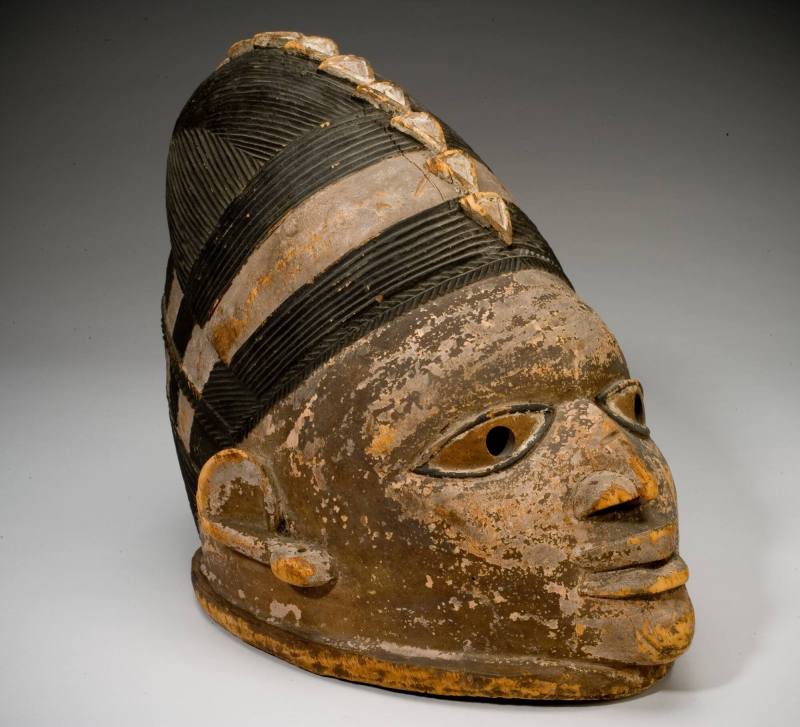
Gelede mask
Date19th-20th century
GeographyOta, Ogun, Nigeria, Africa
MediumPolychromed wood
Dimensionsoverall: 9 7/8 in. x 8 in. x 12 5/8 in. (25.1 cm x 20.3 cm x 32.0675 cm)
Credit LineGift of John J. and Halina Klejman
Object number1959.31
Status
On viewRightsCopyright is retained in accordance with U.S. Copyright laws
Photo creditDavis Museum at Wellesley College, Wellesley, MA
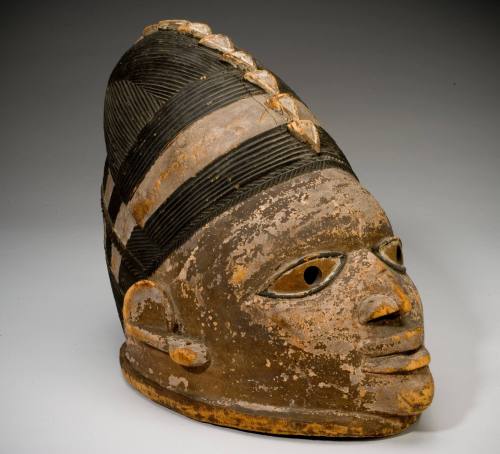
More InformationThe Gelede masquerade honors the great powers of women through the visual arts and ritual dance. Performed by men, Gelede dances acknowledge the hidden authority of elderly women and female ancestors to be greater than that of many orisa, or gods. Gelede masks portray all manner of characters, both male and female, but most depict women. Intended to fit completely over the head, this mask was likely made and first danced in the late nineteenth century. The dancer would have looked through the holes in the eyes of the tranquil face. The ornate hairstyle praised feminine beauty. The intricate carving also reflected Yoruba understanding of the head as the most sacred part of the human body. The dancer would have worn the mask with a sumptuous, brightly colored ensemble. Intended to inspire productive social contributions and good behavior, Gelede masquerades continue to both entertain and educate.