Silver Mounted Bridle
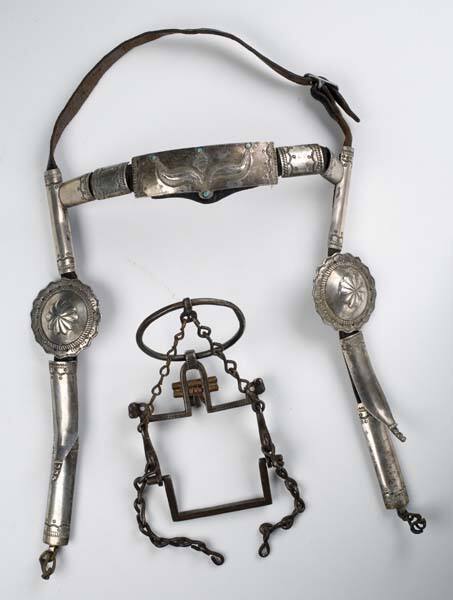
Silver Mounted Bridle
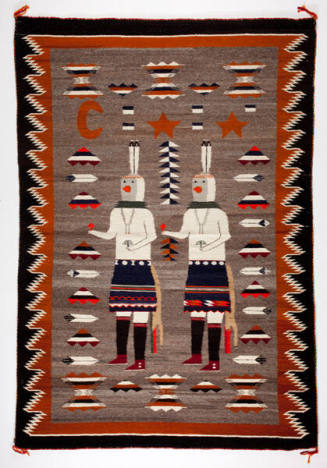
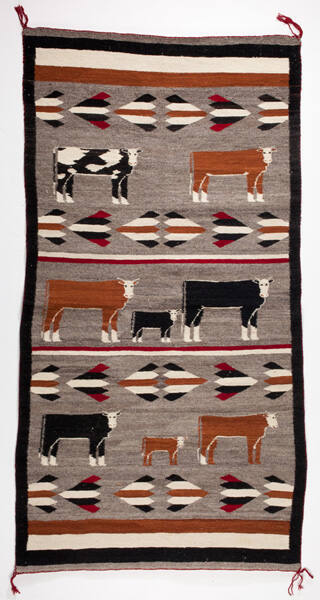
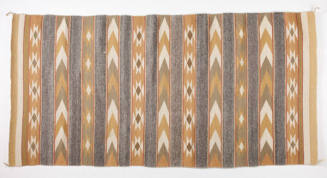
The artistic production of the Navajo (Diné) people is particularly diverse. Currently the second-largest indigenous nation in the United States, the Navajo occupy territory in the Four Corners area of the Southwest. Originally nomadic, they had settled into pueblos by 1500 C.E., and became prolific ceramicists, weavers, painters, and silversmiths.
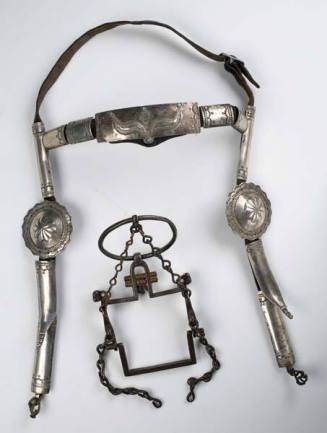
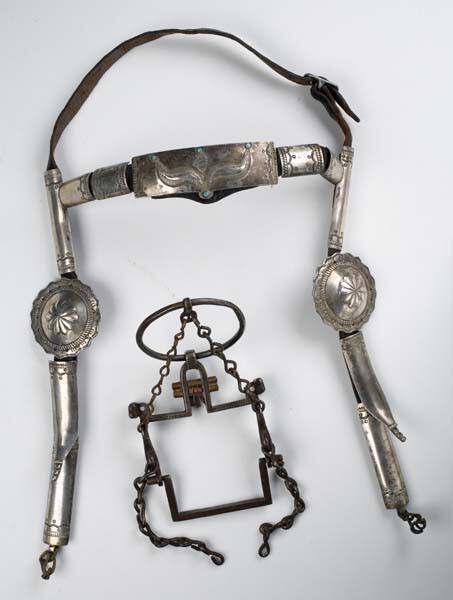
The Navajo learned to make cast and wrought silver from their Mexican neighbors after 1850. Silver and turquoise jewelry were both worn by the Navajo as adornment and used as a form of currency. The silver and leather bridles are made from stamped sheets of silver. The popular conchas (shells) that typically decorated leather belts, like the one in this case, are used in the bridle on view as cheek pieces for a horse.
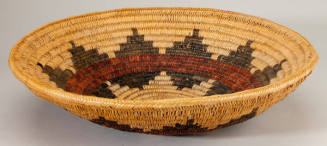
While silverwork was introduced in the late nineteenth century, basket weaving has continued from antiquity to the present. Baskets were an important multipurpose household article, used to cart, store, and serve food and other items. Most baskets were made by coiling, twining, or plaiting reeds or the fibers of plants and trees.