Cup

Skip to main content
This record is part of an active database and may include information from historic documentation that could be inaccurate or incomplete. We frequently update our records based on ongoing research and review. If you have questions, concerns, or additional information about this object, contact us via this form.

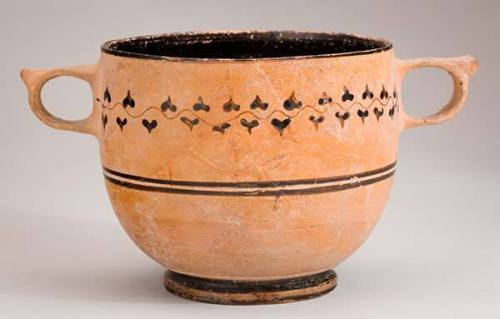
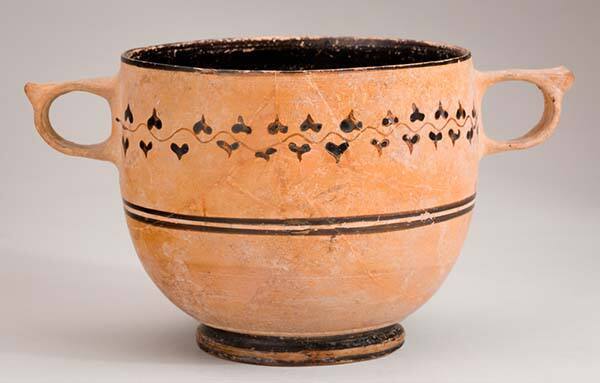
Cup

Maker
DateArchaic period, 6th-5th century B.C.E.
GeographyBoeotia, Greece, Europe
MediumTerracotta
Dimensionsoverall: 4 1/4 in. x 8 in. x 5 1/4 in. (10.8 cm x 20.3 cm x 13.3 cm)
Credit LineGift of Edythe Kumin Shulman (Class of 1932)
Object number1986.198
Status
On view
RightsCopyright is retained in accordance with U.S. Copyright laws
Photo creditDavis Museum at Wellesley College, Wellesley, MA
More Information

Corinthian and Boeotian 

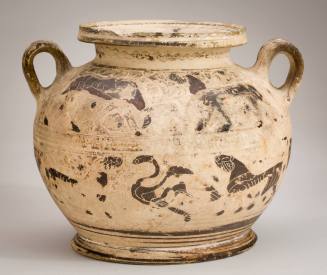
The eighth through the early fifth centuries B.C.E. were a time of diverse pottery production around the Mediterranean. There were several artistic centers, including the city of Corinth, where a new painting technique involving incision and polychromy was developed around 700 B.C.E. Corinth played an important role in trade, where pottery was exported in exchange for other goods. Corinthian pottery is often decorated with friezes of animals, including exotic and mythological beasts such as leopards and sphinxes, a development that testifies to interaction between Greece and the Near East. 


Boeotia, with Thebes as its largest city, was another important region of production. Boeotian pottery, unlike pottery produced in Corinth or Attica, was produced principally for local use rather than export. Potters in Boeotia were often inspired by and adapted the Attic styles that were frequently imported. Floral designs and schematic figural scenes in black paint were typical of the region’s own style throughout the Archaic and Classical periods.
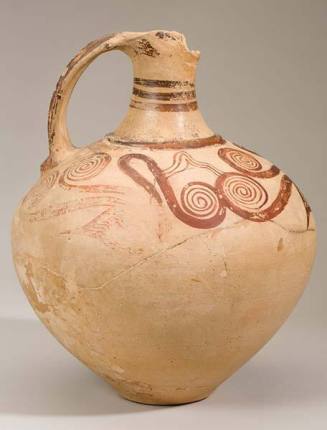
Ewer: Stylized argonauts
Greek
Mycenaean period, ca. 1425-1375 B.C.E.
Object number: 1972.30
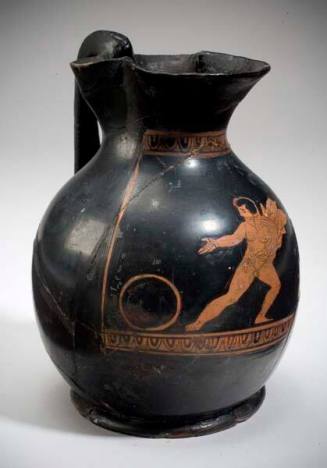
Olpe: Boy and hoop
Greek
Classical period, ca. 430 B.C.E.
Object number: 1969.17.5
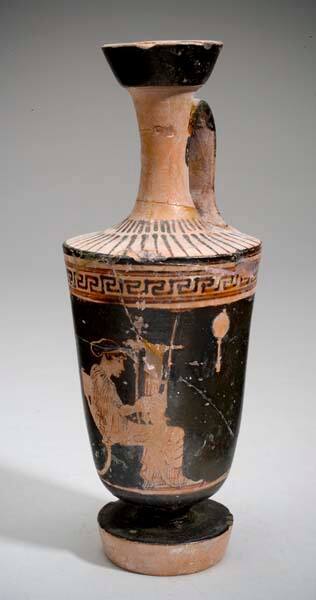
Red-Figure Lekythos
Greek
ca. 450 B.C.E.
Object number: 1969.17.2
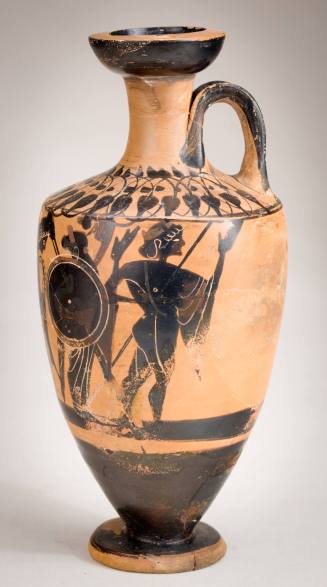
Black-figure lekythos: Warriors arming themselves
Greek
Late Archaic period, late 6th century B.C.E.
Object number: 1942.1
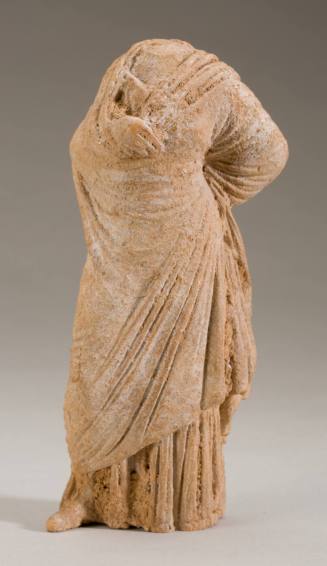
Tanagra figurine of a standing draped woman
Greek
Hellenistic period, 3rd century B.C.E.
Object number: 1933.9
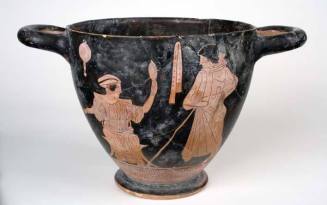
Red-figure skyphos: Seated woman and youth
Greek
Classical period, 450-420 B.C.E.
Object number: 1969.17.6
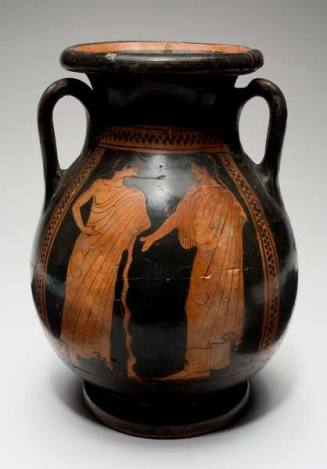
Red-figure pelike: Youth and maiden/Satyr and young woman
Greek
Classical period, 450 B.C.E.
Object number: 1969.17.3
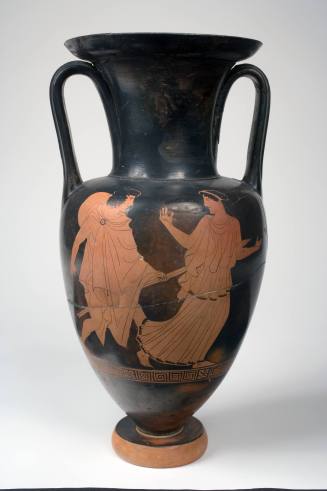
Red-figure Nolan amphora: Man pursuing woman
attributed to the Phiale Painter
Classical period, 450-420 B.C.E.
Object number: 1957.5
Pyxis
Greek
Corinthian period, 600-575 B.C.E.
Object number: 1950.22c
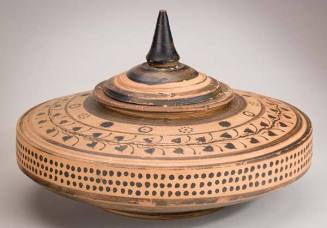
Pyxis and lid
Greek
4th century B.C.E.
Object number: 1973.57
Red-figure bell krater: Dancer / Youths
Greek
Classical period, ca. 400 B.C.E.
Object number: 2009.2
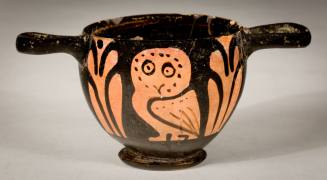
Red-figure skyphos: Owl
Greek
Classical period, 5th century B.C.E.
Object number: 1954.1c