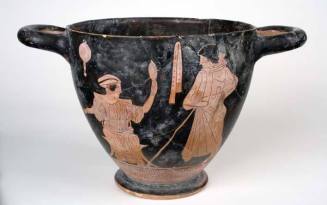
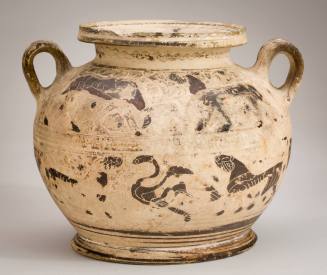
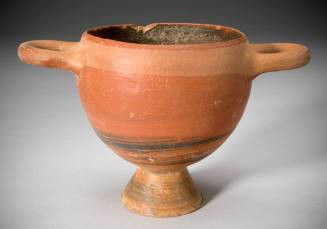
Red-figure skyphos: Owl
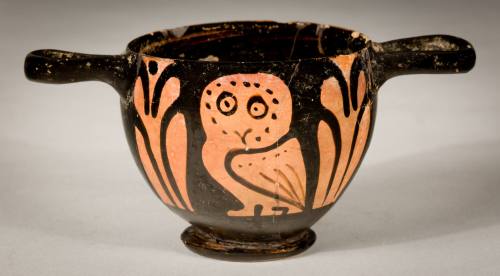
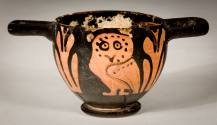
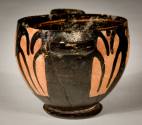
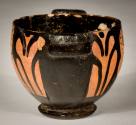
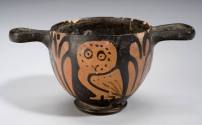
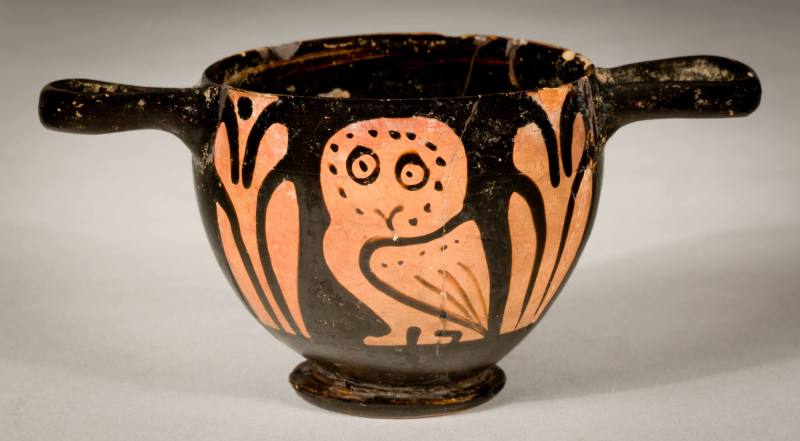
Red-figure skyphos: Owl
Athens and Apulia
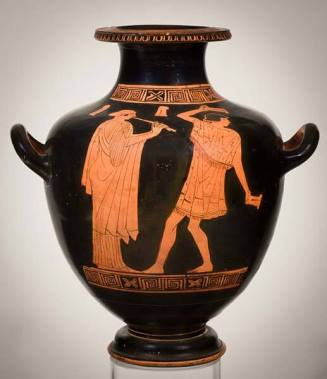
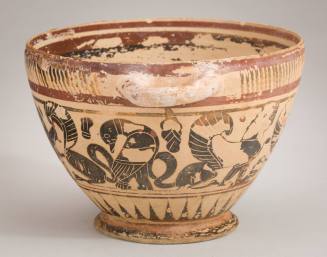
Athens, in the region of Attica, is perhaps the most well known city-state of ancient Greece. In addition to being a political, cultural, and economic power, Athens also became the dominant center of pottery production. In the eighth century B.C.E., Athenian potters specialized in decorating vessels in an abstract style now called the Geometric style. In the sixth century B.C.E., Athenian potters adopted and expanded on a black-figure vase painting technique developed in Corinth, and later invented a red-figure technique that allowed for more detail. This technique would come to dominate the pottery marketplace. Athenian pottery was exported in great quantity across the Greek world and the broader Mediterranean, where it also inspired local variations.
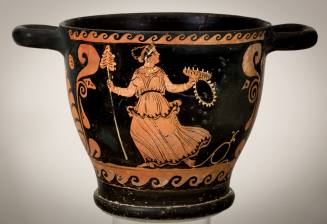
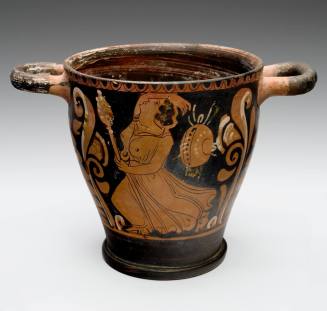
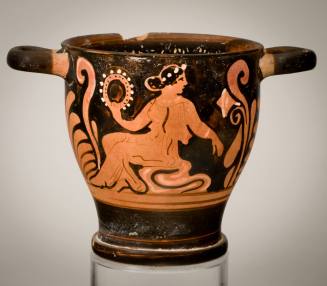
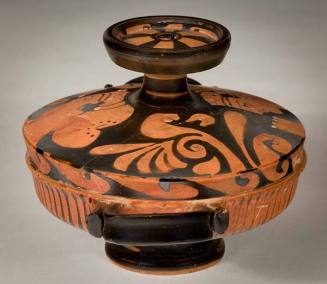
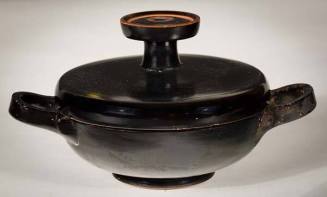
One prolific center for vessel production was located in Apulia, on Italy’s southeastern coast. Southern Italy and Sicily had been settled by Greek colonists beginning in the late eighth century B.C.E., lending the region the name Magna Graecia. Pottery from the mainland was imported here and Apulian potters were inspired by mainland styles and shapes to produce their own wares. Craftsmen imitated Athenian red-figure pottery, but also developed local decorative traditions. Gnathian ware, characterized by its black gloss in imitation of metalwork, is a local variation of an Athenian style.