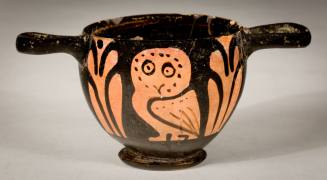
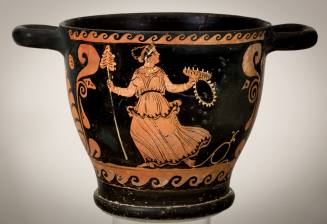
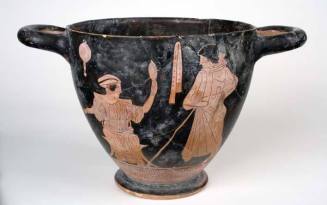
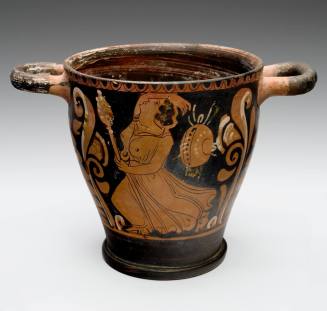
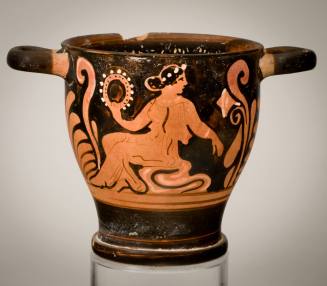
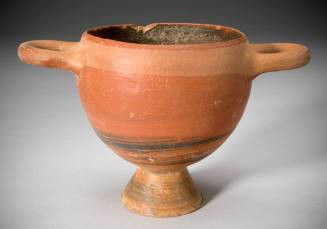
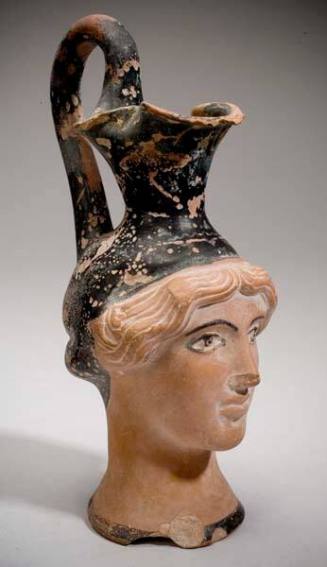
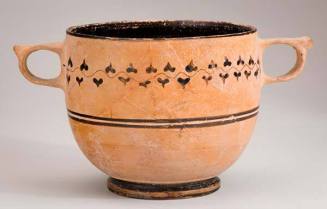
Skyphos
Skyphos
Corinthian and Boeotian
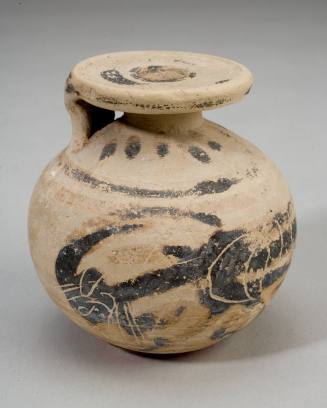
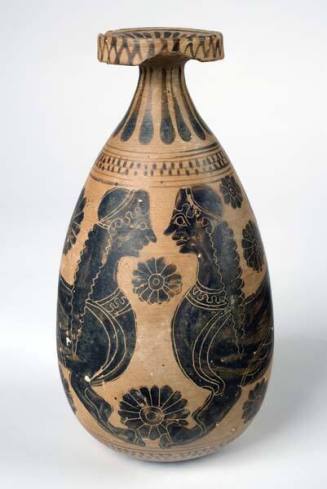
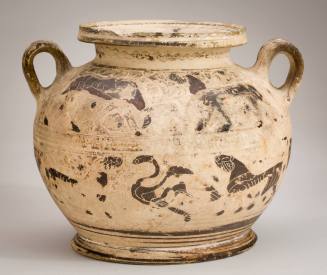
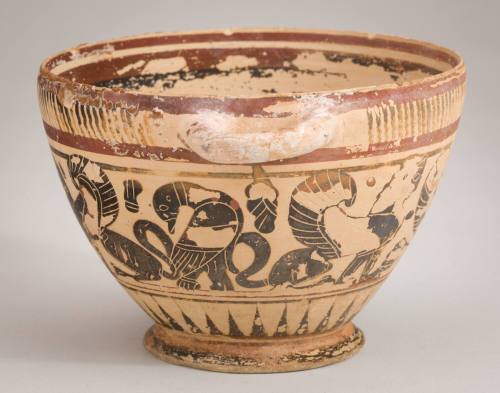
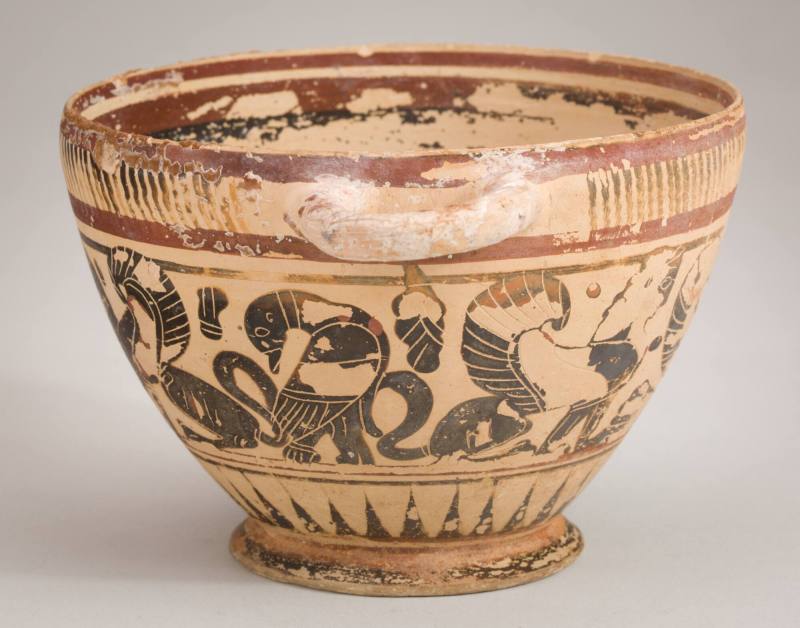
The eighth through the early fifth centuries B.C.E. were a time of diverse pottery production around the Mediterranean. There were several artistic centers, including the city of Corinth, where a new painting technique involving incision and polychromy was developed around 700 B.C.E. Corinth played an important role in trade, where pottery was exported in exchange for other goods. Corinthian pottery is often decorated with friezes of animals, including exotic and mythological beasts such as leopards and sphinxes, a development that testifies to interaction between Greece and the Near East.
Boeotia, with Thebes as its largest city, was another important region of production. Boeotian pottery, unlike pottery produced in Corinth or Attica, was produced principally for local use rather than export. Potters in Boeotia were often inspired by and adapted the Attic styles that were frequently imported. Floral designs and schematic figural scenes in black paint were typical of the region’s own style throughout the Archaic and Classical periods.