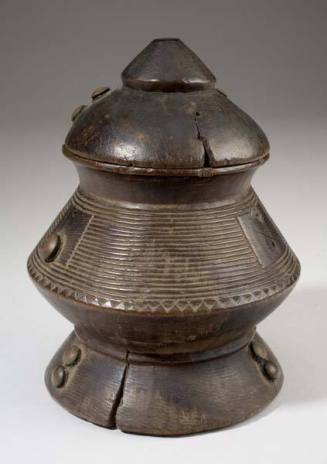
Kuduo (Vessel)
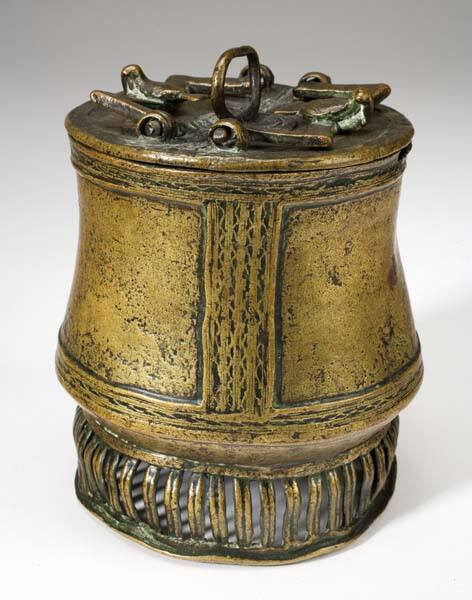
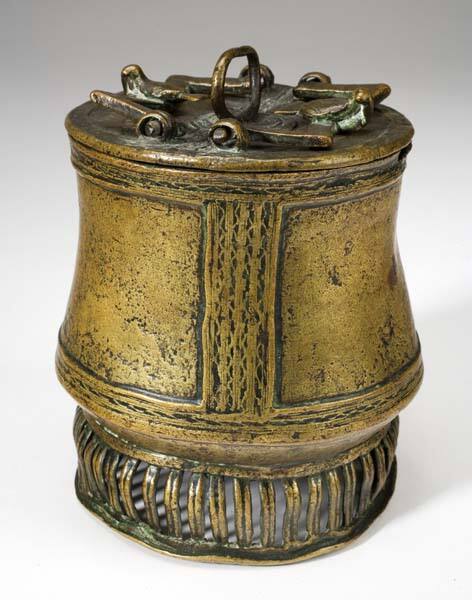
Kuduo (Vessel)
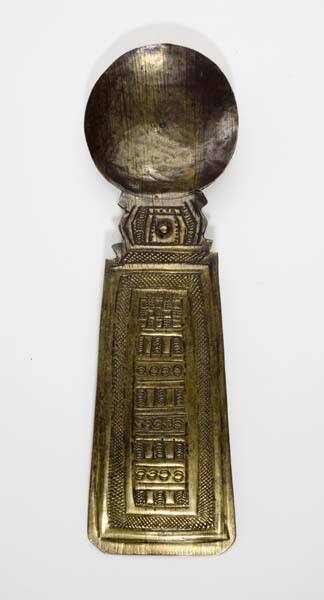
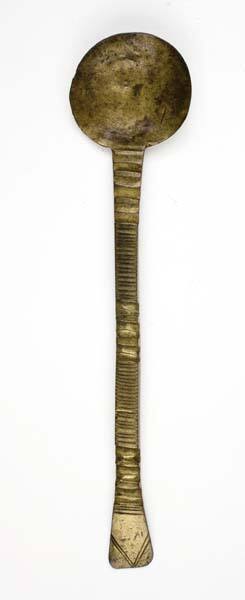
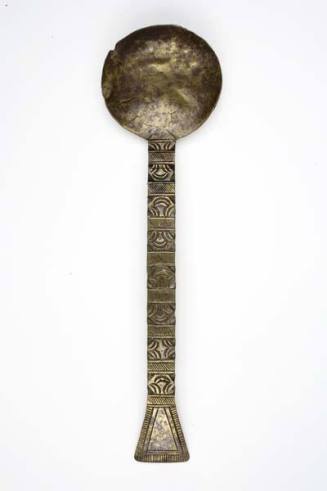
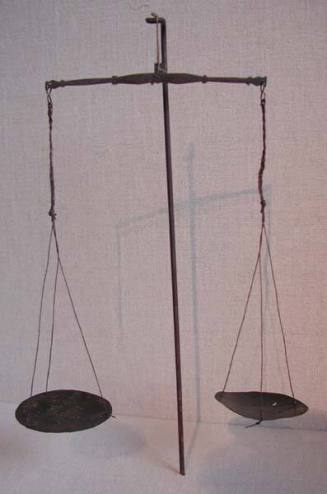
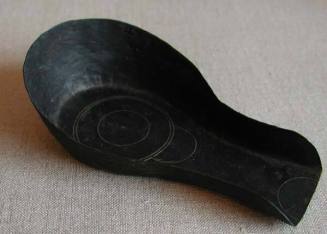
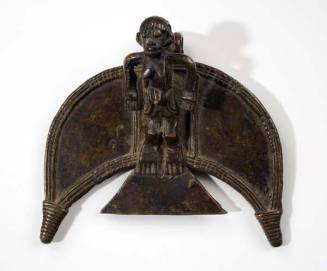
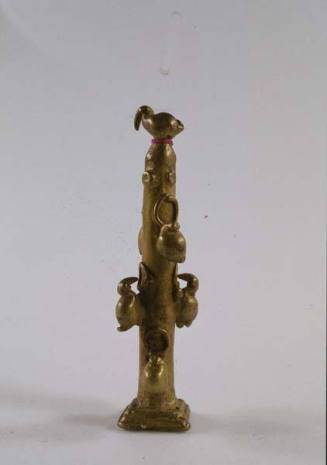
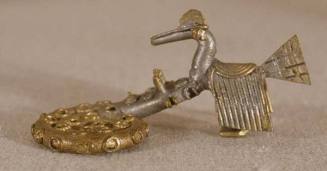
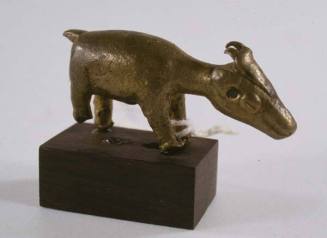
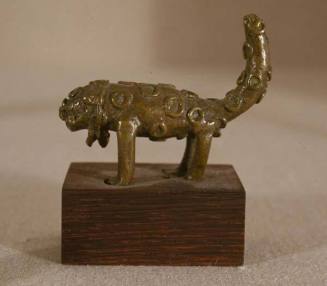
Gold served as an important currency in some Akan cultures by the fifteenth century. More than just money, it held spiritual, economic, and political importance as a manifestation of life’s vital force. Akan courts demonstrated their power through elaborate arts in gold, including jewelry, staff finials, and sword ornaments. Traders adapted an Islamic weight system from northern Africa, using small weights, or mrammuo (sing. abrammuo), to assess gold powder on delicate scales. The most elite treasurers and traders employed ornate spoons and boxes. Once Portuguese merchants arrived in 1471 in search of the region’s precious natural resource, gold’s importance continued to grow.
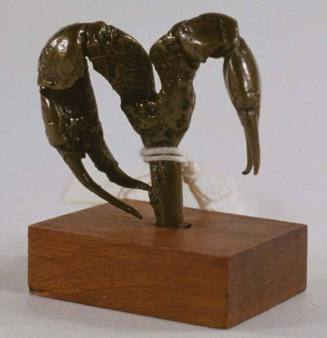
After first emulating abstract geometric weights used to the north in the fifteenth century, Akan artists invented an original style of gold weights, which became especially innovative during the eighteenth and nineteenth centuries. Royal treasuries held scores of them, and traders amassed their own collections. Often illustrating one or more proverbs, these functional weights also served as bearers of knowledge and personal identity.