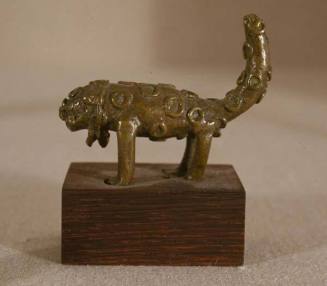
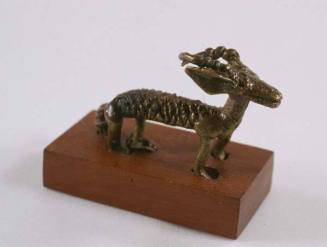
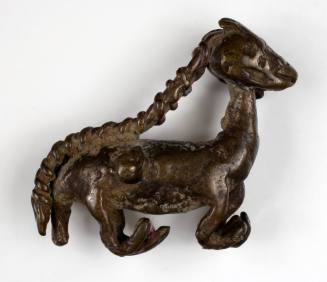
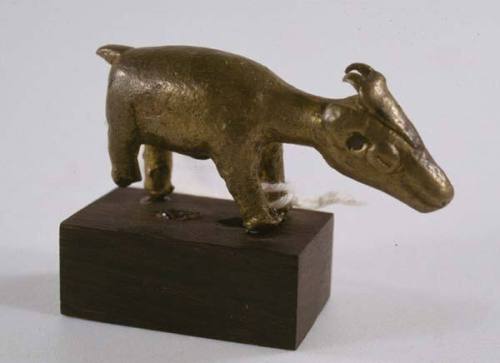
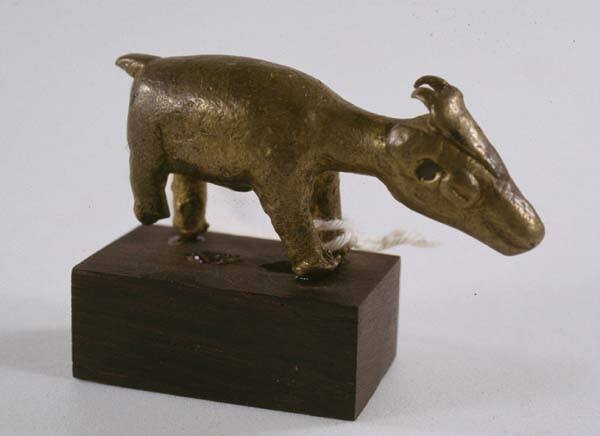
Abrammuo: Goat
Skip to main content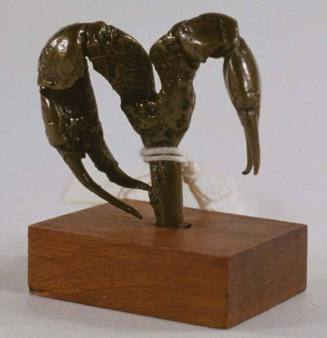
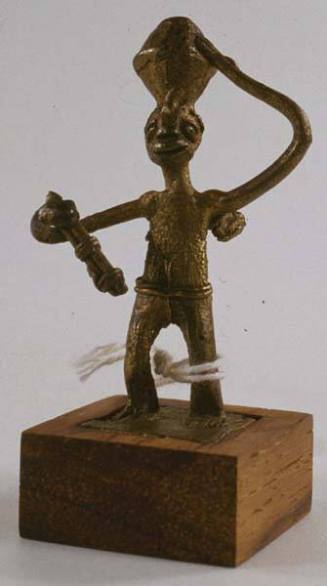
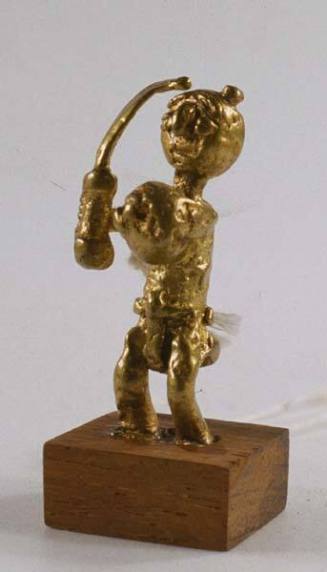
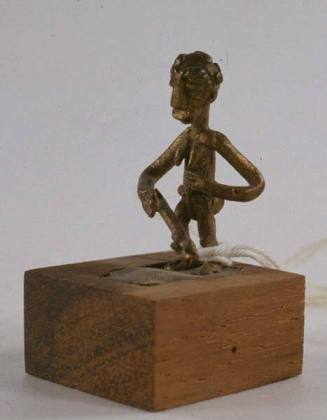
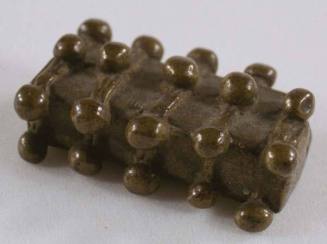
This record is part of an active database and may include information from historic documentation that could be inaccurate or incomplete. We frequently update our records based on ongoing research and review. If you have questions, concerns, or additional information about this object, contact us via this form.
Abrammuo: Goat
Maker
Akan
Date19th century or earlier
GeographyGhana, Africa
MediumBronze
Dimensionsoverall: 7/8 in. x 1 1/2 in. x 1/2 in. (2.2 cm x 3.8 cm x 1.3 cm)
Credit LineGift of John J. and Halina Klejman
Object number1960.50.11
Status
On viewProvenanceBetween 1895 and 1920, probably acquired by Sir Cecil Hamilton Armitage KBE, CMG, DSO in the Gold Coast; 1933, probably purchased from Armitage estate by Maurice Stanley Cockin; 1960, purchased by John J. and Halina Klejman, New York City, New York; 1960, gift of John J. and Halina Klejman to the Davis Museum.
RightsCopyright is retained in accordance with U.S. Copyright laws
Photo creditDavis Museum at Wellesley College, Wellesley, MA
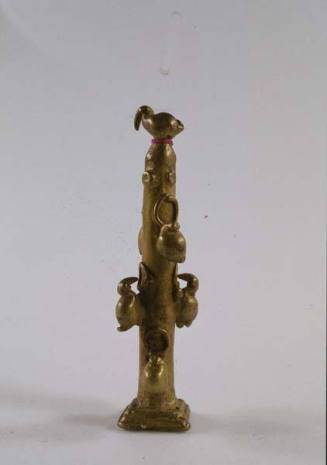
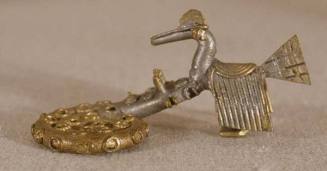
More InformationJust as plants and animals populated the stories and proverbs of Akan elders, their images make up a large proportion of abrammuo (gold weight) production. Some animals would have been associated with the thick rainforests and the hunters who sought them there. Domesticated animals, like chickens, and dangerous guests, like scorpions, also made frequent appearances. Other animals, like the antelope, who trespassed the boundaries between forest, savannah, city, and town, took on special meanings. Creatures that lived on both land and in water were also especially prominent. While some depictions are fanciful, artists cast others from life, including plant pods, crab claws, and insects. These works now stand as an important record of biological history.