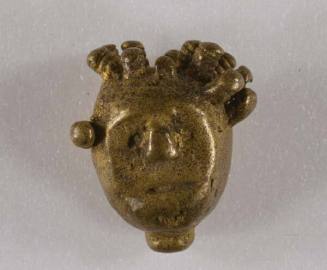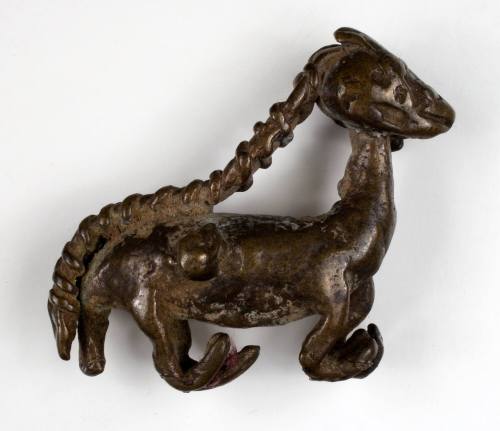
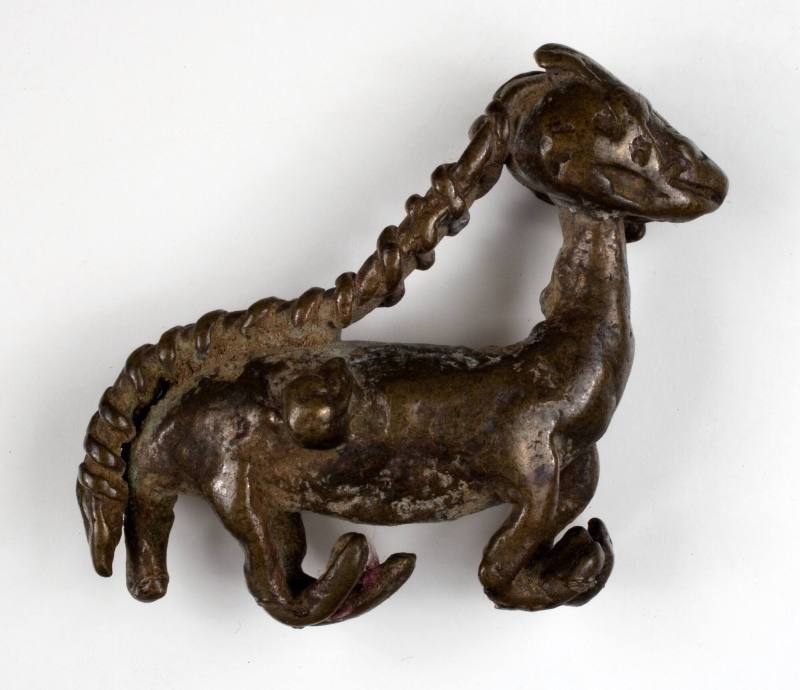
Abrammuo: Antelope

Skip to main content
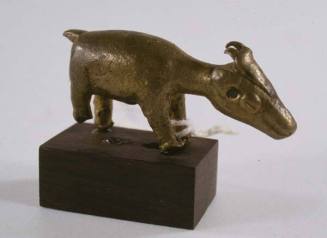
Abrammuo: Antelope
Abrammuo: Antelope
Abrammuo: Antelope
This record is part of an active database and may include information from historic documentation that could be inaccurate or incomplete. We frequently update our records based on ongoing research and review. If you have questions, concerns, or additional information about this object, contact us via this form.

Abrammuo: Antelope

Maker
Date19th century or earlier
GeographyGhana, Africa
MediumBronze
Dimensionsoverall: 1 in. x 1 1/4 in. x 3/8 in. (2.54 cm x 3.1 cm x 1 cm)
Credit LineGift of John J. and Halina Klejman
Object number1960.50.9
Status
On view
ProvenanceBetween 1895 and 1920, probably acquired by Sir Cecil Hamilton Armitage KBE, CMG, DSO in the Gold Coast; 1933, probably purchased from Armitage estate by Maurice Stanley Cockin; 1960, purchased by John J. and Halina Klejman, New York City, New York; 1960, gift of John J. and Halina Klejman to the Davis Museum.
RightsCopyright is retained in accordance with U.S. Copyright laws
Photo creditDavis Museum at Wellesley College, Wellesley, MA
More Information

A visual-verbal nexus forms the core of Akan arts. Visual arts can refer to multiple proverbs and stories, and in turn, words evoke specific symbolic imagery. The Akan abrammuo (gold weight, pl. mrammuo) would have contained potential references to numerous stylized verbal expressions. 


Artists probably began making figural gold weights in the late seventeenth century or early eighteenth century. Gold weights depicted objects, animals, and people associated with Akan symbols of power, wisdom, and wealth. Most portraits depict adult men, but some represent women and children as well. The characters and scenes in figural gold weights might be interpreted as offering guidance, warning, or entertainment. 


Akan peoples may have communicated with gold weights in varying ways. Those in royal treasuries may have been used to instruct children of the court. A trader might have sent messages to debtors through a gold weight. A king’s royal symbols asserted his authority. When in use in a market, gold weights might have facilitated conversations around business transactions.
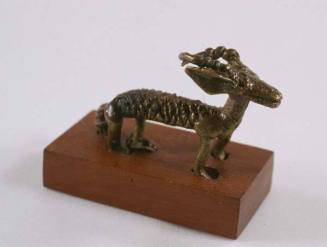

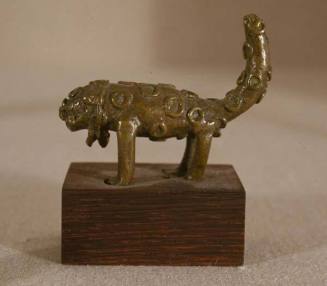
One saying associated with the antelope refers to their limited range of vision: “If I had only known what was behind me.”
Abrammuo: Antelope
Akan
19th century or earlier
Object number: 1960.50.10
Whetstone with Antelope Handle
Luristan
ca. 8th century B.C.E.
Object number: 1994.29
Abrammuo: Leopard
Akan
19th century or earlier
Object number: 1960.50.12
Abrammuo: Pangolin
Akan
19th century or earlier
Object number: 1960.50.23
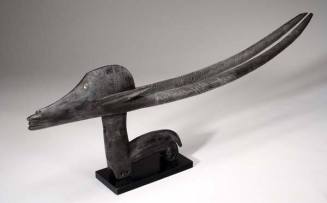
Ciwara (Male Antelope Headdress)
Bamana
20th century
Object number: 1990.31
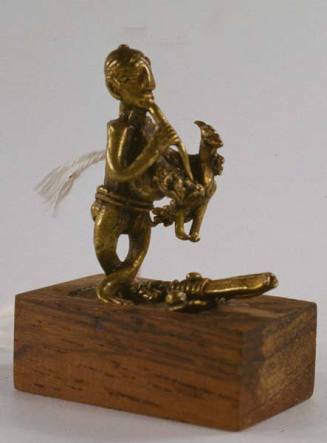
Mrammuo: Man offering eggs to Nyame and Man sacrificing chicken to Nyame
Akan
19th century or earlier
Object number: 1960.50.3
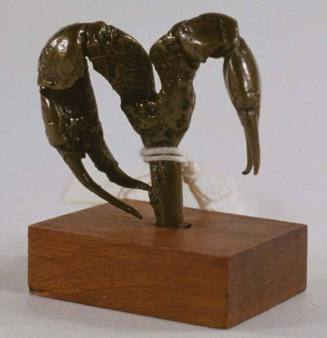
Abrammuo: Pair of crayfish claws
Akan
19th century or earlier
Object number: 1960.50.19
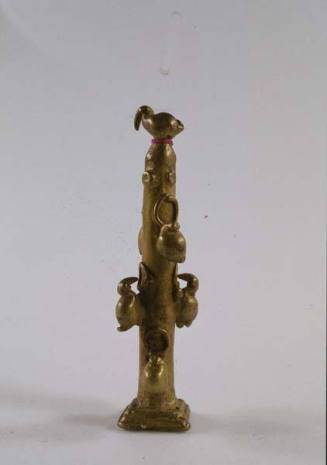
Abrammuo: Birds perched on tree
Akan
19th century or earlier
Object number: 1960.50.13
Abrammuo: Snake attacking bird
Akan
19th century or earlier
Object number: 1960.50.14
Abrammuo: Goat
Akan
19th century or earlier
Object number: 1960.50.11
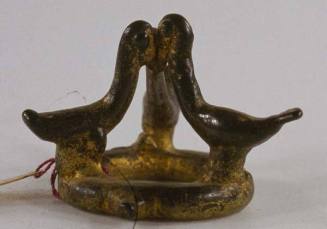
Abrammuo: Birds at fountain
Akan
19th century or earlier
Object number: 1960.50.18
Abrammuo: Decapitated head
Akan
19th century or earlier
Object number: 1960.50.7