Ornamental Lock
Skip to main content
This record is part of an active database and may include information from historic documentation that could be inaccurate or incomplete. We frequently update our records based on ongoing research and review. If you have questions, concerns, or additional information about this object, contact us via this form.
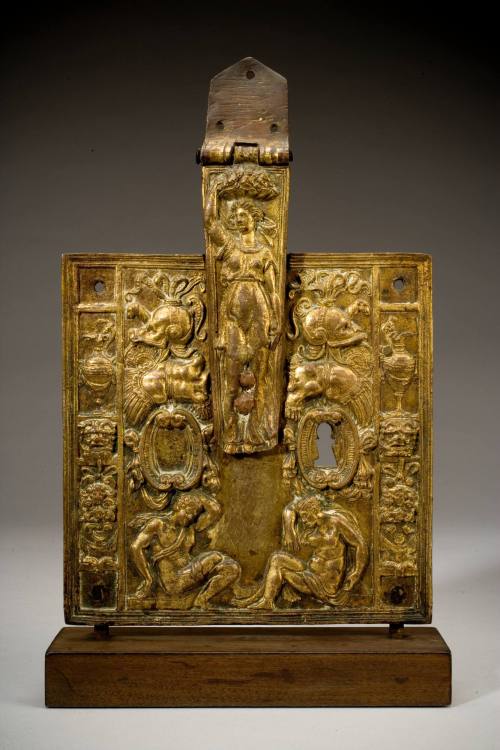
Ornamental Lock
Maker
Italian
Date2nd half of the 16th century
GeographyItaly, Europe
MediumGilt brass
Dimensionsmount: 6 7/8 in. x 6 7/8 in. (17.5 cm x 17.5 cm)
Credit LineGift of John J. and Halina Klejman
Object number1965.15
Status
On viewRightsCopyright is retained in accordance with U.S. Copyright laws
Photo creditDavis Museum at Wellesley College, Wellesley, MA
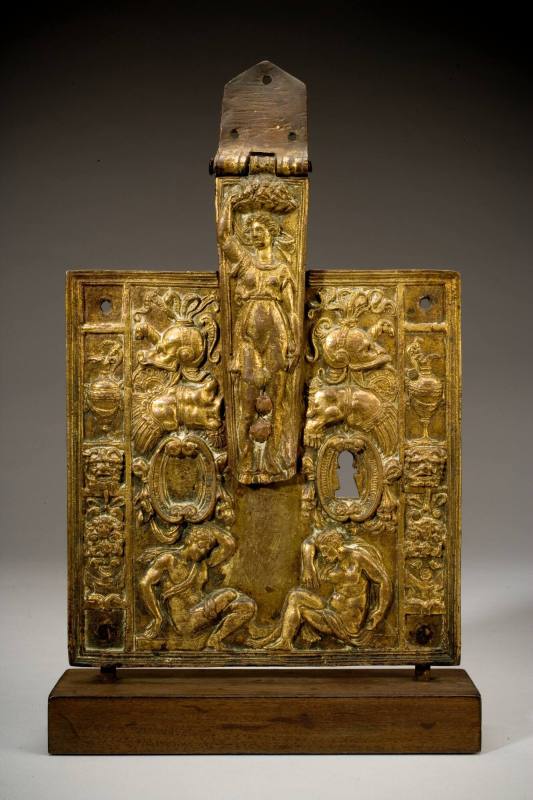
More InformationThe change in the Renaissance from the medieval feudal system to city-states spurred economic growth via commerce, and increased the wealth of private citizens. Prosperity led to the construction of larger residences and an industry of luxury goods meant to reflect power and prestige. Private commissions rivaled institutional patrons such as the Church; the mass market for household objects also grew. Art entered the household through functional decorative arts such as the ornamental lock on display here, as well as in the form of paintings, small sculptures, and plaquettes, like the example showing the Lamentation here, which was intended for private devotion and contemplation.
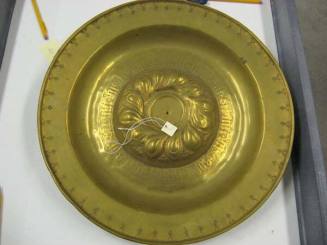
This lock features typical Italian Renaissance decorative elements such as classical figures, armor and trophies, vases, and grotesque masks. A beautiful yet secure closure for a trunk or chest, over forty-four other examples of this lock plate exist. Chests (cassone) were used for both storage and travel, and were commonly part of a woman’s trousseau at marriage. The hasp on this version is broken below the feet of the central allegorical figure of Abundance (identified by the basket overflowing with fruit held above her head), which suggests that someone tried to break the lock to access the contents of the chest. The lock was generously donated by John and Halina Klejman, prominent collectors and dealers who gave much of the African art currently in the Davis Museum collection.